Fruitprocessingplant.com / Equipment and plant interfaces
Air Compressor
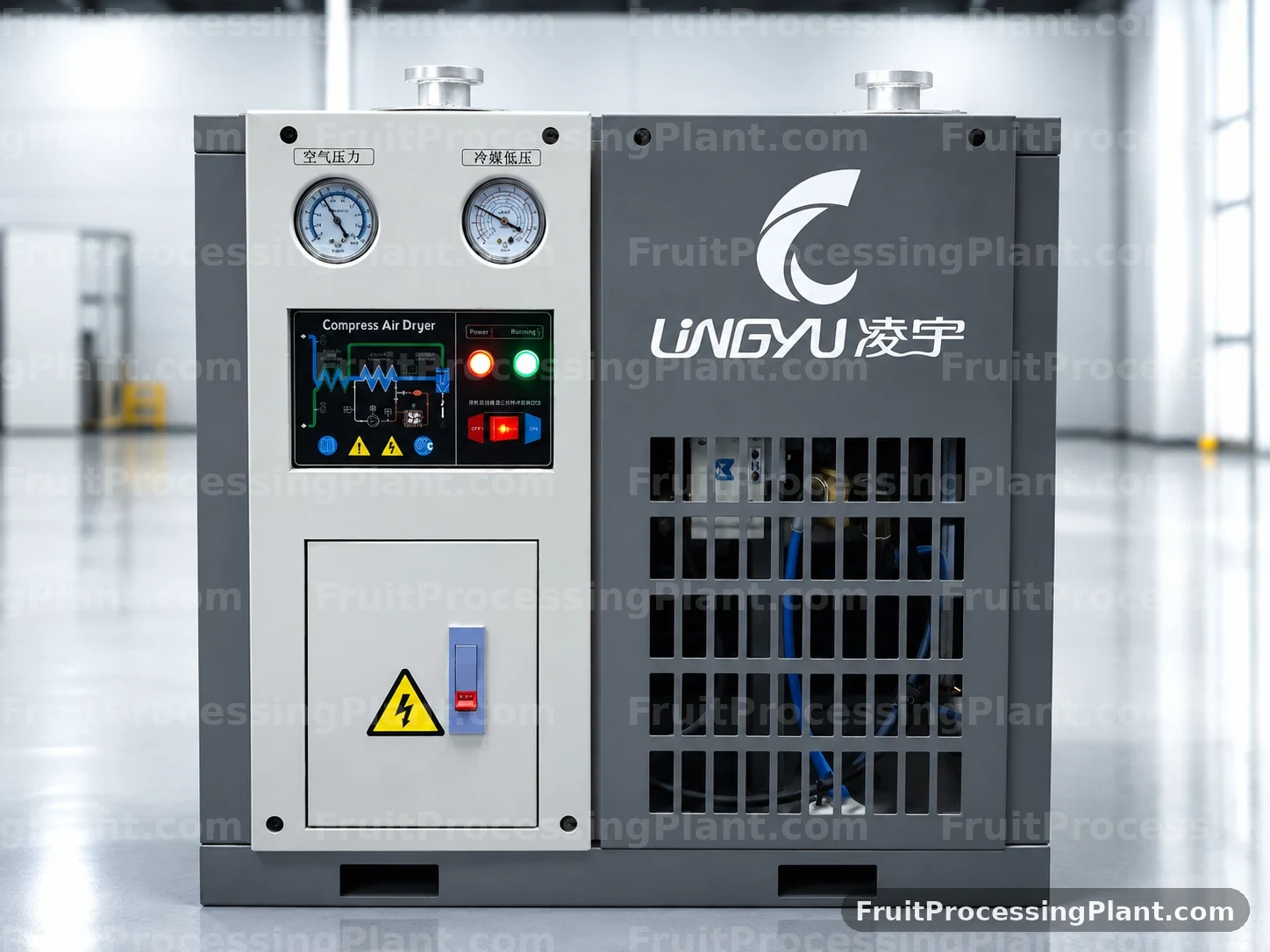
Air compressor for pneumatic devices and automation in fruit processing plants.
Parallel plant services
Product or service input
Ambient intake air and the specified power and installation conditions.
Output and interface
Compressed air after the agreed drying, filtration and distribution system.
View the complete process dutyDiscuss this equipmentSelection boundary
List peak pneumatic demand, pressure at use, dew point and oil/particle quality by application.
Instrument air and air contacting product may need different treatment; pressure alone is not an air-quality specification.
Cleaning and maintenance
Review condensate drains, filter access, receiver inspection, ventilation, noise and distribution pressure losses.
Information that defines the proposed configuration
A model-specific offer must identify the equipment, verified duty and interfaces. The checks below identify required inputs, not guaranteed machine ratings.
Flow demand
Average and peak air flow or a list of consuming machines and valve quantities.
Peak demand determines compressor and receiver size.
Pressure
Required working pressure, pressure drop allowance and farthest point of use.
Pressure and distribution loss determine compressor discharge setting.
Air quality
Dew point, oil-free or oil-lubricated preference, filtration and product-contact risk.
Air quality determines compressor, dryer and filter train.
Operating schedule
Hours per day, load variation, standby requirement and future expansion.
Schedule affects compressor staging and energy use.
Installation
Voltage, ambient temperature, ventilation, noise limit, receiver location and pipe distance.
Room conditions and distribution affect reliability and delivered pressure.
Engineering Notes for Air Compressor Selection
Air Compressor is commonly discussed for aseptic filling, pneumatic valves, control devices, packaging sections. The goal is to make this module work as part of a complete fruit and vegetable processing line, not as an isolated catalogue item.
Utility and control equipment decides whether the processing line can run continuously after the main machines are installed. CIP, water treatment, chilled water, cooling tower, compressed air and PLC control should be sized from the full process route, not from one machine. Steam peaks, cooling load, valve air demand, wash water quality and recipe control can limit production even when the visible equipment looks complete.
For quotation, provide the plant voltage, available water, steam pressure, air compressor status, drainage plan, automation expectation and cleaning philosophy. A semi-automatic line and a recipe-controlled aseptic line need different valve groups, instruments, alarms and operator interfaces. Utility data is also needed for installation drawings, pipe routing and long-term operating cost estimates. The RFQ checklist below should be used to confirm the sizing data before quotation.
- Confirm utility supply before finalizing machine capacity.
- Separate product-contact CIP circuits from general cleaning where hygiene risk is higher.
- Plan alarm, interlock and recipe control according to operator skill and traceability needs.
- Treat all utility consumption values as references until the final process route is frozen.
Related planning pages: CIP system for product-contact cleaning, PLC control system, and full process flow planning. Use them to compare equipment, plant routes and RFQ scope before final quotation.
Equipment FAQ
How is peak air demand calculated?
Peak demand is based on machines and pneumatic valves that can operate at the same time, plus leakage and a reasonable reserve. Average consumption alone can undersize the receiver or compressor.
When is oil-free air required?
Oil-free or higher filtration may be required when compressed air can contact product, sterile packaging or critical instruments. The risk point should be identified in the process and packaging layout.
Is a dryer included?
A dryer and filters can be included when the required dew point and air quality are known. Local humidity and pipe exposure should also be considered.
Can Air Compressor be customized?
Yes. Capacity, product-contact or container-contact parts, motor and drive selection, controls, guarding, inlet and outlet arrangement, platform and line interfaces can be configured from the project data listed on this page. Final scope is confirmed before manufacturing.
Why is there no fixed online price for Air Compressor?
The same equipment name can cover different capacity, construction, controls, guarding, accessories and upstream or downstream interfaces. A fixed public price would hide those differences. The RFQ process confirms the required scope before a project quotation is prepared.