Fruitprocessingplant.com / Equipment and plant interfaces
Washing Conveying Air Drying Machine
Washing conveying air drying machine for surface water removal after fruit and vegetable washing.
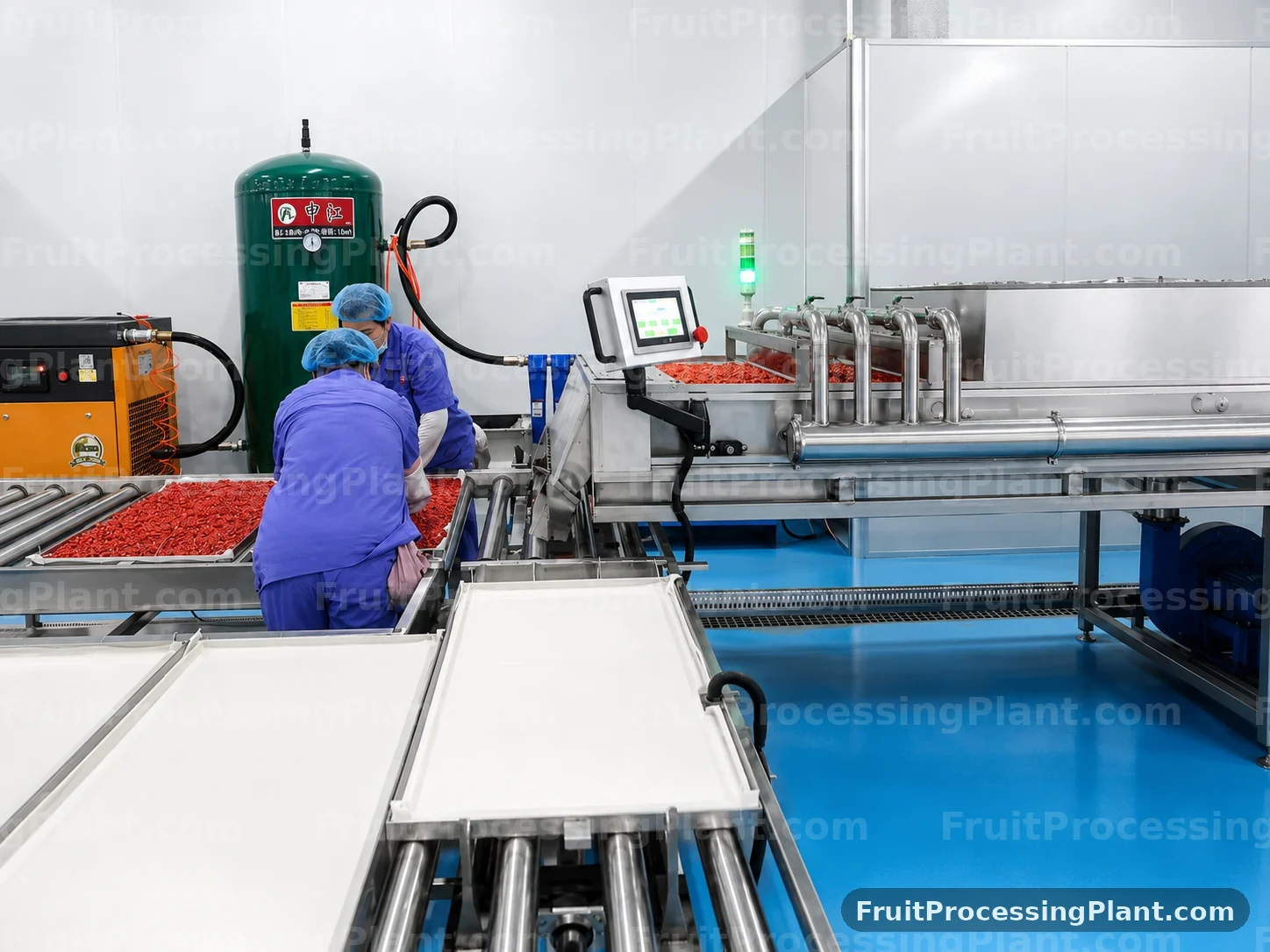
Receiving, washing and sorting
Product or service input
Washed produce carrying surface water before inspection or further preparation.
Output and interface
Conveyed produce with reduced external water carryover.
View the complete process dutyDiscuss this equipmentSelection boundary
Specify the surface-water objective, crop geometry, belt loading and allowable contact.
Air removal of surface water does not dry the crop internally or replace preservation.
Cleaning and maintenance
Review belt, air-nozzle and under-conveyor access; route rinse and carryover water away from clean interfaces.
Information that defines the proposed configuration
A model-specific offer must identify the equipment, verified duty and interfaces. The checks below identify required inputs, not guaranteed machine ratings.
Raw material condition
Fruit or vegetable type, firmness, typical size range, fresh or frozen state, soil, leaves, stones and defect level.
Firmness and contamination load determine washing force, contact method and solids removal.
Intake and schedule
kg/h or t/h intake, operating hours per day, campaign length and expected peak feed.
Peak intake controls machine width, residence time, water volume and line balance.
Cleaning objective
Soil removal target, final rinse requirement, water reuse preference and allowable product bruising.
The required cleaning duty changes spray, bubble, brush and rinse configuration.
Inspection and grading
Manual inspection requirement, number of operators, lighting, grading bands and reject discharge method.
Inspection width and reject handling affect ergonomics and practical throughput.
Site and interfaces
Receiving method, inlet and outlet height, next machine, voltage, water supply, drainage and available floor space.
Interface and drainage data prevent installation conflicts and hygiene problems.
Engineering Notes for Washing Conveying Air Drying Machine Selection
Washing Conveying Air Drying Machine is commonly discussed for fresh-cut fruit and vegetable pretreatment, surface drying before packaging, products requiring cleaner visual presentation, lines where excess water affects downstream handling. The goal is to make this module work as part of a complete fruit and vegetable processing line, not as an isolated catalogue item.
In an industrial fruit or vegetable plant, front-end handling is not just a conveyor decision. Soil load, floating behavior, raw material firmness, defect level and downstream extraction route determine whether bubble washing, brush contact, spray rinsing, roller inspection or grading should be used. The equipment should keep product flow stable while removing field contamination before crushing, pulping, juicing or filling.
For quotation, the buyer should describe the raw material condition at receiving, the expected hourly intake, the amount of leaves, sand, stones or damaged material, and the discharge height required by the next machine. Water circulation, drain position, operator inspection space and cleaning access should be checked early because they affect both hygiene and installation cost. The RFQ checklist below should be used to confirm the sizing data before quotation.
- Match washing force to fruit firmness so cleaning does not create bruising.
- Confirm drain and solids discharge because washing equipment can move soil downstream if it is undersized.
- Plan inspection width and lighting when manual sorting is part of the line.
- Treat capacity values as reference only until the raw material state and working schedule are confirmed.
Related planning pages: washing and sorting equipment overview, apple washing before crushing, and tomato sorting before extraction. Use them to compare equipment, plant routes and RFQ scope before final quotation.
Equipment FAQ
How is washing force selected?
Washing force is selected from surface contamination, fruit firmness, size and the risk of bruising. Soft fruit may require gentle bubble or spray handling, while firmer raw material may tolerate brush contact. The final choice should also consider water reuse, solids removal and the next process step.
What drainage information is required?
Provide floor drain locations, available flow, solids capture method and whether wash water will be recirculated. Poor drainage can carry soil and leaves into downstream equipment or create sanitation problems around the receiving area.
Can inspection and grading be integrated?
Yes. Roller inspection, manual sorting, lighting and drum grading can be arranged in one front-end section. State the defect types, operator count, size bands and reject route so the conveyor width and discharge points can be planned.
Can Washing Conveying Air Drying Machine be customized?
Yes. Capacity, product-contact or container-contact parts, motor and drive selection, controls, guarding, inlet and outlet arrangement, platform and line interfaces can be configured from the project data listed on this page. Final scope is confirmed before manufacturing.
Why is there no fixed online price for Washing Conveying Air Drying Machine?
The same equipment name can cover different capacity, construction, controls, guarding, accessories and upstream or downstream interfaces. A fixed public price would hide those differences. The RFQ process confirms the required scope before a project quotation is prepared.