Fruitprocessingplant.com / Raw material route
Apple Processing Line
Turnkey apple processing line manufacturer for juice, concentrate, puree and aseptic bulk filling, with washing, pressing, clarification, evaporation and RFQ design.
Choose the finished-product boundary
The crop-specific engineering notes below define preparation and recovery questions. Select the product and packaging separately; the same front end does not make every downstream route equivalent.
Common Engineering Problems
- Rapid oxidation after crushing can darken juice before heat treatment.
- Over-crushing may damage seeds and introduce bitterness.
- Pomace moisture target affects yield and waste handling.
- Clarification load changes with variety, maturity and enzyme plan.
- Aroma loss can happen during long holding or aggressive evaporation.
- CIP access around press, tanks and heat exchangers must be planned early.
Apple Processing Line Engineering Notes for Equipment Buyers
This section is written for RFQ preparation. Values are reference only until raw material tests, product specifications and final layout review confirm the process route.
Raw material behavior
Apple variety, firmness, storage condition and defect level affect crushing behavior, juice yield, browning risk and pomace moisture. Receiving and sorting should remove rotten fruit before the press section.
Process route logic
Juice routes usually use washing, sorting, crushing, enzymatic treatment where required, belt pressing, clarification or filtration, deaeration, sterilization and filling. Puree routes use pulping and tubular heat treatment instead.
Factory planning boundary
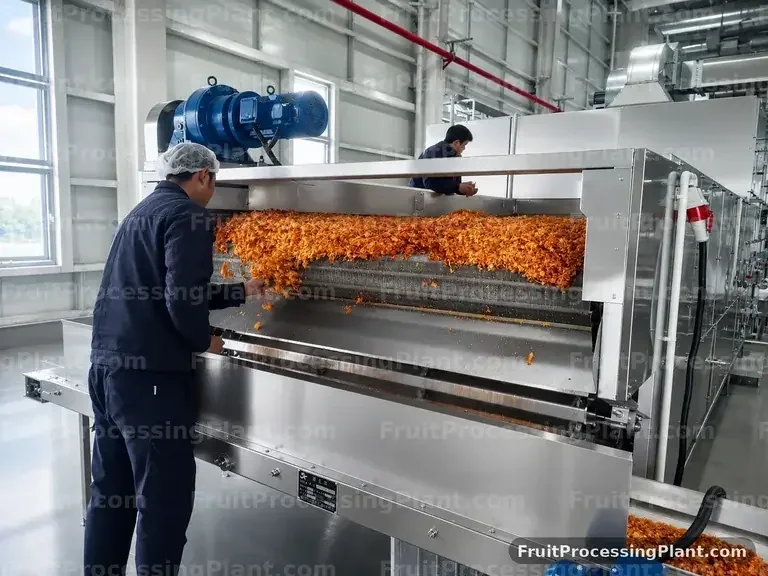
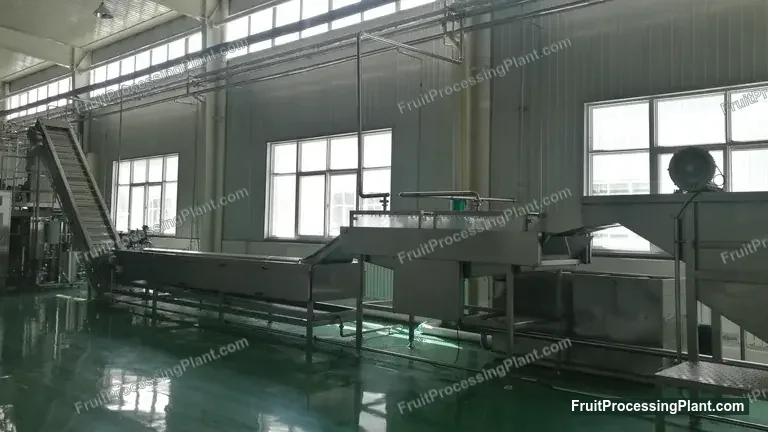
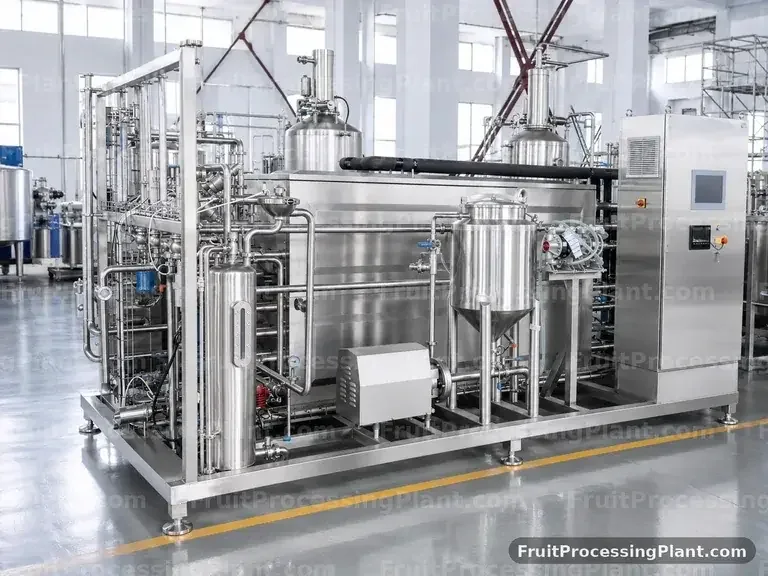
The complete scope may include washing and sorting system, hammer crusher, belt press juicer, enzymatic tank, vacuum deaerator, falling film evaporator, sterilizer and aseptic filler. Confirm steam, power, compressed air, cooling water, drainage, CIP level and automation requirement before judging price.
Key Engineering Decisions
This crop-specific review separates the main process decisions before capacity and equipment are finalized.
| Design Checkpoint | Reference Data or Decision | Effect on the Line |
|---|---|---|
| Product route | Define the pressing route versus puree route before sizing extraction equipment. | Juice needs crushing, pressing and optional clarification; puree needs pulping, refining and viscosity-aware heat treatment. |
| Press performance | Record fruit firmness, mash condition, press yield and pomace discharge moisture. | Pomace discharge behavior affects belt loading, wash demand, press stability and downstream solids balance. |
| Juice specification | Confirm cloudy, naturally settled or clear juice and the required clarification endpoint. | The endpoint determines enzyme holding, separation, filtration, evaporator feed quality and aroma exposure. |
- Keep the time between crushing and deaeration short enough to manage enzymatic browning.
- Confirm whether aroma recovery is required when clear juice concentrate is the primary product.
- Separate nominal fruit intake from clarified juice flow when balancing tanks and thermal equipment.
| RFQ Item | Reference Information to Provide | Engineering Reason |
|---|---|---|
| Finished products | cloudy apple juice, clear apple juice, apple puree, apple concentrate and aseptic apple ingredient | Different products may share the same front end but require different pulping, heat treatment, filling and storage logic. |
| Critical concern | browning, press yield, pomace moisture, enzymatic treatment, clarification load, aroma retention and evaporator selection | This is usually where equipment sizing, material selection, cleaning design and quality risk become different from a generic line. |
| Capacity and season | Hourly intake, operating hours per day, harvest season or frozen raw material plan. | Capacity affects buffer tanks, utility peak load, staffing, front-end width and aseptic filler size. |
| Brix, pH, viscosity and particles | Use measured data when available. If not, mark values as preliminary planning references only. | These values decide pump type, heat exchanger style, deaeration, evaporation and filling behavior. |
| Packaging and shelf life | Aseptic drum, bag-in-bin, bottle, pouch, can, jar, frozen pack or chilled distribution. | Packaging changes sterilization, filling machine, SIP/CIP scope, logistics and finished product storage. |
Related Process Modules
Compare related equipment modules before defining the line scope and RFQ inputs.
belt press juicer for apple juice extractionfalling film evaporator for apple juice concentrateBrix calculator for apple concentrate planningsend a production line RFQEngineering Factors for Apple Processing Line
The review focuses on the difference between pressed juice, clarified juice, concentrate and puree routes, including browning control, pomace handling and evaporation decisions.
Use these checkpoints for early project evaluation. Final equipment selection requires confirmed product data, utility conditions and process requirements.
Key Engineering Factors
- Pressing or pulping routeBelt pressing supports juice recovery while pulping and refining support puree production; the two routes need different preparation and waste handling.
- Oxidation controlTime between crushing, extraction, deaeration and heat treatment affects browning, aroma and color.
- Pomace and clarificationPress aid, enzyme treatment, clarification target and pomace moisture affect yield, filtration load and by-product handling.
Apple Processing Line Questions Buyers Ask Before RFQ
Direct answers below explain the decisions that change process scope, equipment selection and quotation quality.
Should apples be belt pressed or pulped for processing?
Use a pressing route when the main product is apple juice or juice concentrate and separation of pomace is required. Use pulping and refining when the target is apple puree or a fiber-containing base. Variety, maturity, desired yield, solids target and downstream heat treatment should be confirmed before selecting either route.
How can enzymatic browning be controlled in an apple processing line?
Browning control starts with short transfer times, controlled crushing, limited air pickup and stable product temperature. Deaeration, antioxidant strategy and prompt heat treatment may also be discussed according to the recipe and market requirements. Equipment alone cannot correct long holding times or uncontrolled exposure between open processing steps.
What determines whether apple juice should be clear or cloudy?
Clear juice requires clarification and filtration targets that remove suspended solids, while cloudy juice retains selected fruit body and needs stable turbidity management. The choice changes enzyme treatment, separation equipment, heat exchanger selection, tank agitation and final appearance. It should be specified before a complete line and utility load are calculated.
When is an evaporator required for apple processing?
An evaporator is required when the finished product is apple juice concentrate or when soluble solids must be raised for storage or transport. Feed Brix, target Brix, aroma recovery, heat sensitivity, viscosity and cleaning interval determine the evaporator discussion. NFC juice and ordinary single-strength juice do not automatically require concentration.
How should apple pomace be handled after juice extraction?
Pomace discharge should be planned around press throughput, residual moisture, floor drainage and the intended by-product route. It may be collected for pectin, feed, composting or disposal according to local conditions. Conveyors and collection areas need enough capacity to prevent pomace buildup from restricting the washing and pressing section.
Your next engineering decision
Bring the product, site and scope together.
Start with contact details and a short requirement. Add product properties, capacity basis, packaging and utility conditions when available.