Fruitprocessingplant.com / Equipment and plant interfaces
Hammer Crusher
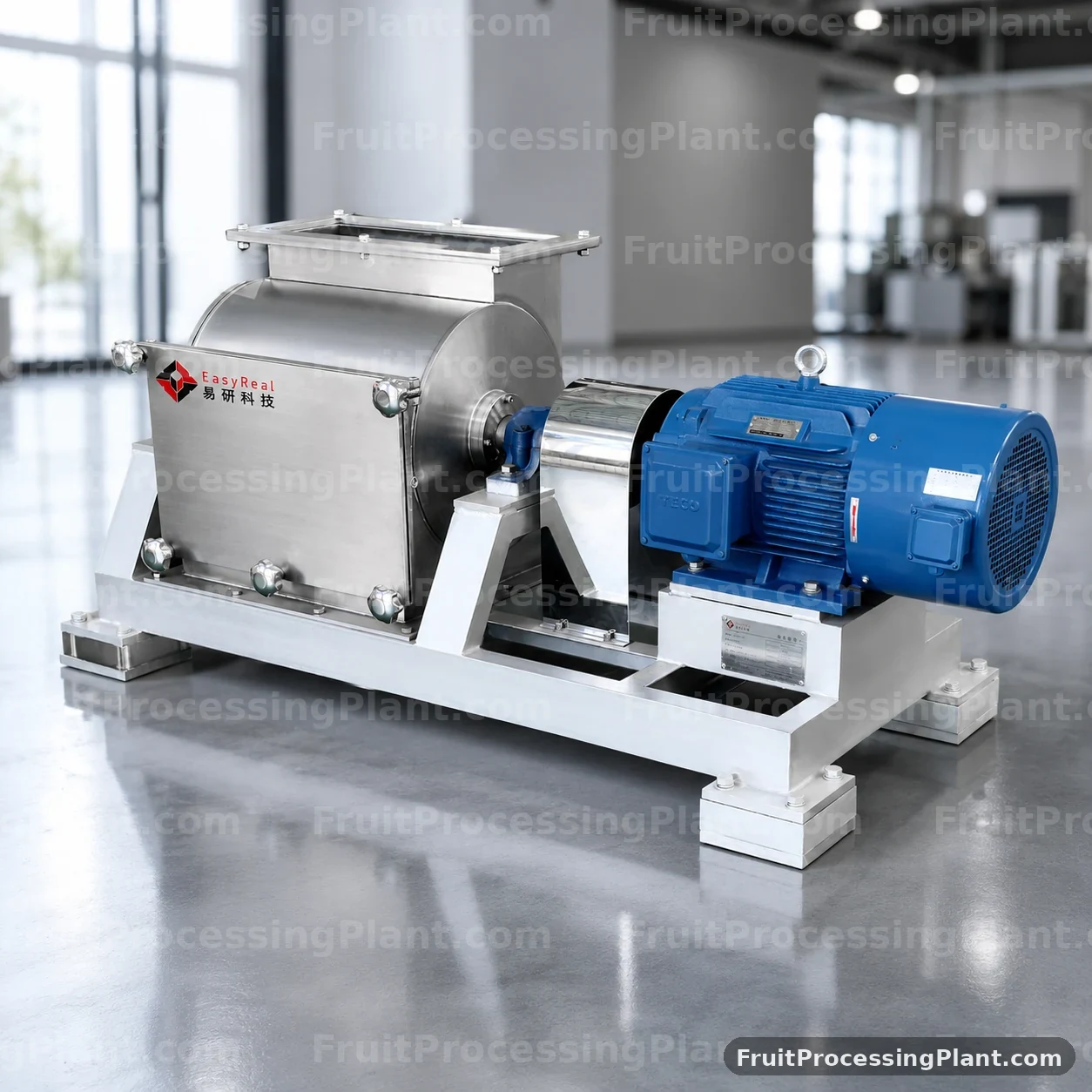
Hammer crusher manufacturer for fruit crushing equipment and processing lines. Configure feed material, capacity, particle size, motor and downstream interface for RFQ.
Preparation, recovery and refining
Product or service input
Prepared firm fruit or vegetables with foreign objects removed.
Output and interface
A mash or reduced-size feed for pressing or pulping.
View the complete process dutyDiscuss this equipmentSelection boundary
Evaluate hardness, seed and stone risk, required mash size and the downstream recovery method.
Excessive crushing can increase fines or break bitter seeds; a crusher does not refine or clarify juice.
Cleaning and maintenance
Inspect wear parts and clearances; provide safe access, isolation and a planned path for mash transfer.
Information that defines the proposed configuration
A model-specific offer must identify the equipment, verified duty and interfaces. The checks below identify required inputs, not guaranteed machine ratings.
Raw material anatomy
Fruit type, variety, maturity, size, peel, stone, seed and fiber characteristics.
Raw material structure determines rotor, gap, screen and extraction method.
Required output
Coarse mash, juice, pulp or separated residue target, including particle size and allowable seed or peel fragments.
Output specification prevents over-crushing and protects downstream quality.
Capacity and feed
kg/h or t/h, feed temperature, whole or pre-cut material and feeding method.
Feed condition affects drive load, inlet geometry and stable throughput.
Yield and waste route
Juice or pulp yield target, pomace condition and waste discharge or recovery plan.
Yield and residue handling influence screen area, pressure and discharge design.
Installation interface
Previous and next machine, inlet and outlet height, pump or conveyor connection, voltage, wash water and drainage.
Interface data prevents transfer bottlenecks and cleaning access problems.
Engineering Notes for Hammer Crusher Selection
Hammer Crusher is commonly discussed for tomato and berry crushing, apple and carrot size reduction, chili sauce raw material preparation, pre-crushing before pulping or extraction. The goal is to make this module work as part of a complete fruit and vegetable processing line, not as an isolated catalogue item.
Crushing and extraction equipment must be selected from the fruit structure, not from the equipment name alone. A hammer crusher, belt press, citrus extractor or passion fruit juicer handles a different balance of peel, seed, fiber, juice sacs and pulp. Rotor form, screen or gap setting, inlet size, outlet transfer and product-contact stainless steel surfaces all affect yield, particle size and downstream fouling.
The main engineering risk is damaging seed, peel or fiber in a way that changes flavor and filtration load. The machine should feed the next pulper, cooker, press, deaerator or sterilizer with stable material rather than simply making smaller pieces. For preliminary selection, state the fruit variety, maturity, defect level, required particle size, juice yield target and whether the route is juice, puree, paste, jam or concentrate. The RFQ checklist below should be used to confirm the sizing data before quotation.
- Confirm whether the process needs coarse breaking, fine crushing, juice extraction or seed separation.
- Check screen size, rotor speed and discharge method against downstream pulper or pump limits.
- Avoid over-crushing when seed bitterness, peel oil or fiber fines can harm product quality.
- Use stated capacities as typical planning references until sample behavior is reviewed.
Related planning pages: hammer crusher selection, double-stage pulping machine, and fruit processing process flow. Use them to compare equipment, plant routes and RFQ scope before final quotation.
Equipment FAQ
How do you avoid seed or peel bitterness?
The machine type, rotor action, gap and residence time are selected to open the fruit without unnecessarily breaking bitter seeds or peel. Send the fruit variety and acceptable residue specification so extraction and screen settings can be reviewed.
Is a crusher the same as a pulper?
No. A crusher reduces size or prepares mash, while a pulper separates usable pulp from peel, seeds and coarse fiber through a screen. Some routes use both, and others use a dedicated extractor or press instead.
Which capacity should be quoted?
Provide fresh raw material intake per hour, not only finished juice output. Yield varies with fruit variety and maturity, so both intake and expected product yield are needed for a useful equipment selection.
Can Hammer Crusher be customized?
Yes. Capacity, product-contact or container-contact parts, motor and drive selection, controls, guarding, inlet and outlet arrangement, platform and line interfaces can be configured from the project data listed on this page. Final scope is confirmed before manufacturing.
Why is there no fixed online price for Hammer Crusher?
The same equipment name can cover different capacity, construction, controls, guarding, accessories and upstream or downstream interfaces. A fixed public price would hide those differences. The RFQ process confirms the required scope before a project quotation is prepared.