Fruitprocessingplant.com / Raw material route
Passion Fruit Processing Line
Turnkey passion fruit processing line manufacturer for juice, pulp and concentrate with seed separation, pasteurization and aseptic filling.
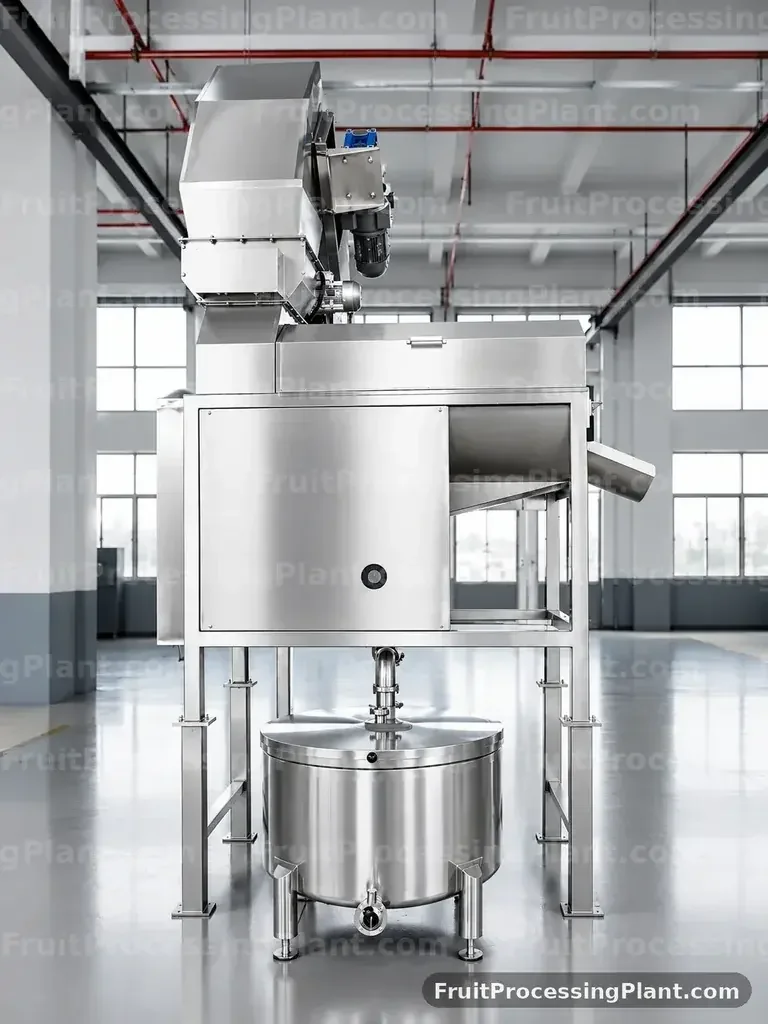
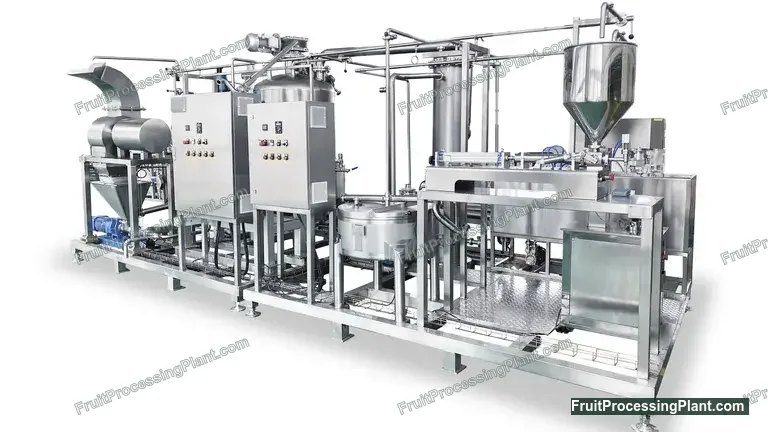
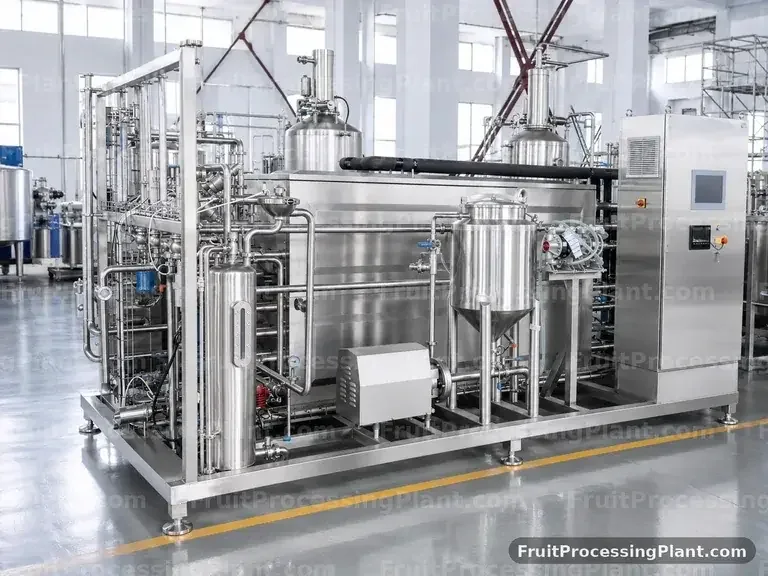
Choose the finished-product boundary
The crop-specific engineering notes below define preparation and recovery questions. Select the product and packaging separately; the same front end does not make every downstream route equivalent.
Common Engineering Problems
- Seed breakage can create bitter notes and black specks.
- Aroma loss can happen during long holding, evaporation or excessive heat treatment.
- High acidity affects material selection and cleaning chemistry.
- Pulp percentage changes viscosity and filling behavior.
- Foaming during extraction or deaeration can reduce throughput.
- CIP must remove seed residues and sticky pulp from screens and tanks.
FAQ
How are passion fruit seeds separated?
Passion fruit processing normally opens the fruit and separates pulp from shell, then controls seed carryover with a juicing or finishing section. The goal is to remove seeds without breaking too many of them, because broken seeds can create bitter notes and black specks. The RFQ should state acceptable pulp percentage and seed residue so the extraction equipment and screen route can be selected correctly.
How can aroma loss be reduced?
Aroma loss is reduced by limiting holding time, controlling oxygen exposure, using deaeration where appropriate and avoiding unnecessary high-temperature residence. If concentration is required, low-temperature evaporation or aroma-aware process settings may be discussed. Packaging also matters because aseptic bulk, bottle and pouch routes use different thermal histories. The buyer should state whether aroma is a critical acceptance criterion. A short sample description or photo helps confirm whether the proposed route is realistic.
Can passion fruit juice be concentrated?
Yes, but concentration changes aroma, acidity balance and heat load. Passion fruit concentrate should be planned from feed Brix, target Brix, pulp content, acidity and expected flavor retention. Evaporation is not required for every passion fruit project; juice, pulp and beverage base may be filled directly after suitable pasteurization. The buyer should decide whether logistics or ingredient density justify concentration.
Does acidity affect equipment selection?
Yes. Passion fruit acidity affects material selection, cleaning chemistry, flavor balance and product stability. It also influences the heat-treatment target together with packaging and shelf life. Acidity alone does not select the whole line, but it should be sent with Brix, pulp percentage, seed requirements and target product. This helps avoid unsuitable materials or an overly generic juice process. Utilities, cleaning frequency and automation level should be listed before final layout discussion.
What data is needed for passion fruit RFQ?
Send fruit size, pulp yield expectation, shell handling plan, seed separation target, pulp percentage, initial Brix, target Brix if concentrate is required, acidity, aroma requirement, capacity, packaging format, steam, power, compressed air, cooling water, CIP and layout conditions. If the product is a beverage base, include the later blending or dilution target as well. For early quotations, mark all values as reference only until sample testing confirms them.
What to send for equipment selection
Send raw material, required capacity, final product, packaging format and available utilities. We will use these inputs to review the process route and equipment scope.
Get a Capacity-Based QuoteDiscuss on WhatsAppPassion Fruit Processing Line Engineering Notes for Equipment Buyers
This section is written for RFQ preparation. Values are reference only until raw material tests, product specifications and final layout review confirm the process route.
Raw material behavior
Passion fruit contains peel, pulp sacs and seeds that must be separated without crushing seeds into bitter fragments. Acidity and aroma drive the heat-treatment and filling decision.
Process route logic
The route usually includes washing, sorting, cutting or crushing, passion fruit juicing, seed separation or controlled seed retention, deaeration, sterilization and filling.
Factory planning boundary
The complete scope may include washing system, passion fruit juicer, finisher, vacuum deaerator, plate or tubular sterilizer and aseptic filler. Confirm steam, power, compressed air, cooling water, drainage, CIP level and automation requirement before judging price.
Key Engineering Decisions
This crop-specific review separates the main process decisions before capacity and equipment are finalized.
| Design Checkpoint | Reference Data or Decision | Effect on the Line |
|---|---|---|
| Finished product style | Make the seed retention decision before selecting juice finishing and filling equipment. | Seed-free concentrate, pulp base and seed-containing beverage products require different separation and transfer logic. |
| Extraction action | Control cutting and extraction to limit seed breakage and peel carryover. | Broken seeds or peel fragments can add bitterness, increase fines and overload the finishing section. |
| Volatile quality | Define how aroma-rich pulp will be handled through deaeration, heating and sterile holding. | Vacuum level, residence time and thermal exposure should protect aroma while still controlling foam and microbial risk. |
- Measure the ratio of peel, seeds and recoverable pulp instead of estimating finished flow from whole-fruit intake alone.
- Confirm whether visible seeds are a desired product feature or a reject condition.
- Use acidity and package route to set thermal validation inputs rather than copying another fruit process.
| RFQ Item | Reference Information to Provide | Engineering Reason |
|---|---|---|
| Finished products | passion fruit juice, pulp base, concentrate, seed-containing beverage base and aseptic ingredient | Different products may share the same front end but require different pulping, heat treatment, filling and storage logic. |
| Critical concern | seed breakage, peel separation, aroma retention, acidity, foam, particle control and filling stability | This is usually where equipment sizing, material selection, cleaning design and quality risk become different from a generic line. |
| Capacity and season | Hourly intake, operating hours per day, harvest season or frozen raw material plan. | Capacity affects buffer tanks, utility peak load, staffing, front-end width and aseptic filler size. |
| Brix, pH, viscosity and particles | Use measured data when available. If not, mark values as preliminary planning references only. | These values decide pump type, heat exchanger style, deaeration, evaporation and filling behavior. |
| Packaging and shelf life | Aseptic drum, bag-in-bin, bottle, pouch, can, jar, frozen pack or chilled distribution. | Packaging changes sterilization, filling machine, SIP/CIP scope, logistics and finished product storage. |
Related Process Modules
Compare related equipment modules before defining the line scope and RFQ inputs.
passion fruit juicer for pulp and juice extractionvacuum deaerator for passion fruit foam controlplate sterilizer for passion fruit juicesend a production line RFQYour next engineering decision
Bring the product, site and scope together.
Start with contact details and a short requirement. Add product properties, capacity basis, packaging and utility conditions when available.