Fruitprocessingplant.com / Equipment and plant interfaces
Single-Head Aseptic Filling Machine
Single-head aseptic filling machine manufacturer for bag-in-drum fruit puree filling. Configure viscosity, particles, sterile transfer, SIP, CIP and RFQ scope.
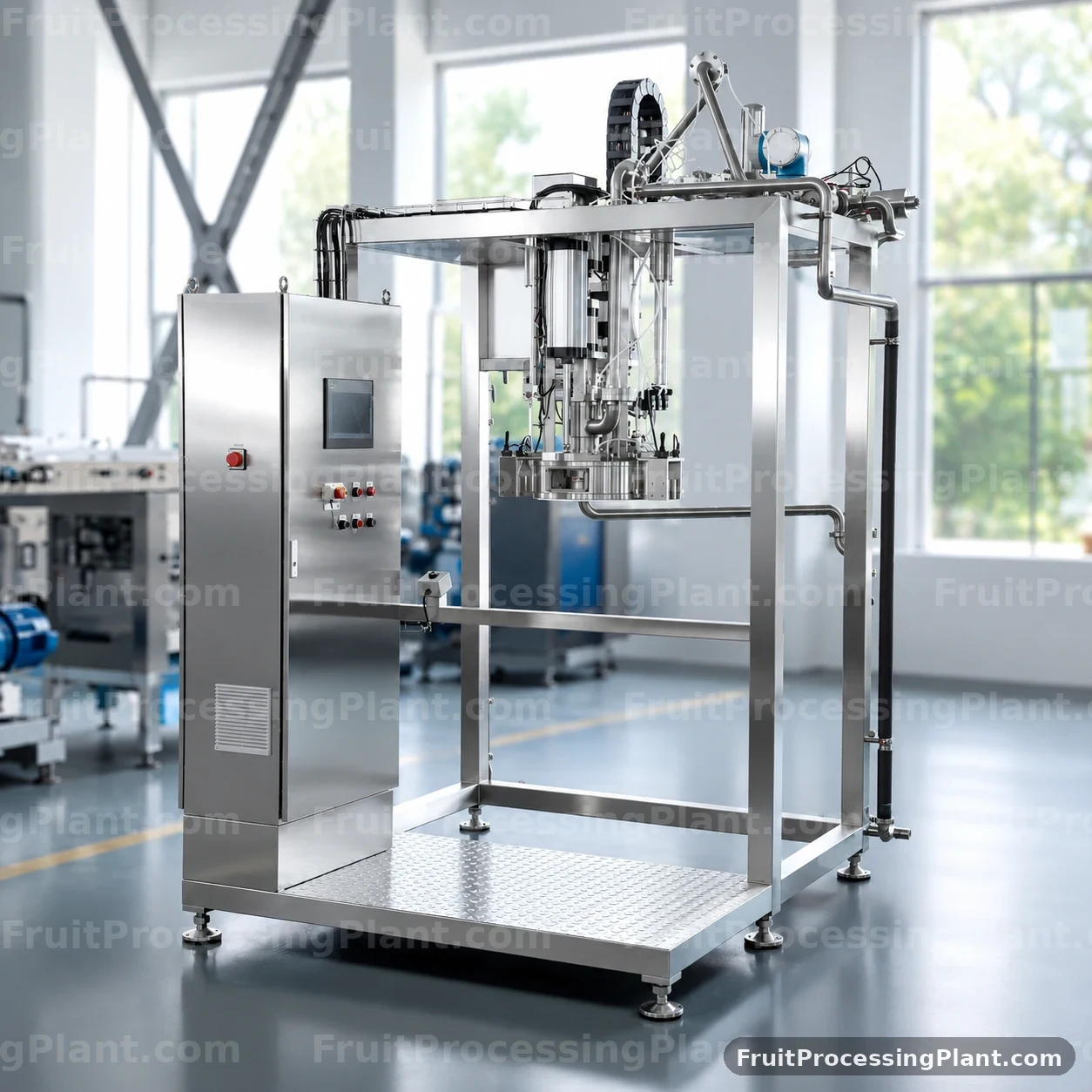
Filling and package handling
Product or service input
Product from a validated aseptic transfer boundary and compatible pre-sterilized bags.
Output and interface
Filled and closed bulk bags under the agreed aseptic handling procedure.
View the complete process dutyDiscuss this equipmentSelection boundary
Review bag fitment, product viscosity, particles, filling mass and container exchange time.
Head count is not a capacity guarantee; product supply, bag handling and sterile-boundary recovery also matter.
Cleaning and maintenance
Agree CIP/SIP boundaries, fitment handling, steam and air requirements, access and sterile restart procedures.
Information that defines the proposed configuration
A model-specific offer must identify the equipment, verified duty and interfaces. The checks below identify required inputs, not guaranteed machine ratings.
Product properties
Product name, filling temperature, viscosity, Brix, pulp and maximum particle size.
Product behavior determines valve, filling path and measurement method.
Package and spout
Bag-in-drum or bag-in-bin, nominal volume, bag supplier, spout type and drum or bin dimensions.
Bag and spout details determine clamping, sterilization and container handling.
Capacity and head count
Required bags per hour, product flow, operating hours and changeover schedule.
Cycle time determines single- or double-head configuration and buffer needs.
Sterilizer interface
Upstream sterilizer type, sterile transfer pressure, pipe size, filling temperature and back-pressure requirement.
The filler and sterilizer must operate as one sterile section.
SIP, CIP and utilities
Steam pressure and quality, sterile air, compressed air, power, CIP connection, SIP sequence and condensate drainage.
Sterile utilities and cleaning logic determine aseptic reliability.
Engineering Notes for Single-Head Aseptic Filling Machine Selection
Single-Head Aseptic Filling Machine is commonly discussed for aseptic fruit puree, industrial pulp packaging, concentrate filling, bulk ingredient supply. The goal is to make this module work as part of a complete fruit and vegetable processing line, not as an isolated catalogue item.
Filling equipment is selected after the product route and thermal process are clear. Aseptic bag filling is used for shelf-stable bulk products after sterilization, while bottle, can or non-aseptic filling may require hot filling, pasteurization or refrigerated distribution depending on the product. Package size, cap or spout type, filling temperature, viscosity and particles directly affect filling head, measurement method and conveyor design.
For aseptic lines, CIP and SIP logic, sterile chamber design, spout sterilization, steam quality and sterile transfer from the UHT system must be reviewed together. For retail packaging, container rinsing, capping, labeling, date coding and tunnel pasteurization may become part of the scope. State whether the package is bag-in-drum, bag-in-box, bottle, can, jar or pouch, and mark all package sizes as reference until final supplier drawings are confirmed. The RFQ checklist below should be used to confirm the sizing data before quotation.
- Confirm package type, volume range and whether the product is aseptic, hot-filled or refrigerated.
- Match filling measurement to viscosity, foam, particles and required accuracy.
- Plan CIP/SIP or cleaning access before fixing the layout.
- Keep sterilizer, transfer line and filler logic connected in the quotation scope.
Related planning pages: tubular sterilizer before filling, double-head aseptic filling machine, and send an equipment RFQ. Use them to compare equipment, plant routes and RFQ scope before final quotation.
Single-Head Aseptic Filling Machine Questions Buyers Ask Before RFQ
Direct answers below explain the decisions that change process scope, equipment selection and quotation quality.
Which projects are suitable for a single-head aseptic filling machine?
A single-head filler suits projects where required bag-in-drum or bag-in-bin throughput can be achieved with one filling station and acceptable package change time. It is often considered for moderate capacities or phased plants. Final selection must match package size, product flow, operator handling and the connected sterilizer output.
How is real single-head aseptic filling capacity calculated?
Real capacity includes sterile connection, bag handling, filling, disconnection and drum or bin movement. Product viscosity, foaming, target weight and operator rhythm also matter. Use packages per hour under defined product conditions, not only the filler inlet flow, because package change time can become the limiting part of the cycle.
Can a single-head filler handle both drums and bins?
Some designs can support different package sizes with suitable conveyors, supports, filling controls and bag interfaces, but this must be specified before manufacture. Drum and bin height, bag connection, target weight and movement method differ. A flexible requirement may add change parts, structure or control recipes that should appear clearly in the RFQ.
What product data is needed for the aseptic filling nozzle?
Provide viscosity and temperature at filling, Brix, fiber, particle type and maximum dimensions, target package weight and required flow. These values influence nozzle passage, valve selection, pressure drop and fill control. The upstream sterilizer and product pump must deliver the same validated product condition to the filler inlet.
How can a future double-head expansion be planned from a single-head project?
Reserve floor space, conveyor alignment, sterile product header capacity, utilities, CIP flow, electrical load and PLC expansion. The upstream sterilizer should also have a realistic future capacity basis. Designing these interfaces during the first phase can reduce later shutdown and piping changes, even when the second filling head is not purchased immediately.