
Cooling load
Provide process heat load or equipment list instead of selecting cooling capacity from production throughput alone.
A chilled water unit supports cooling after heat treatment, product temperature control or utility requirements.
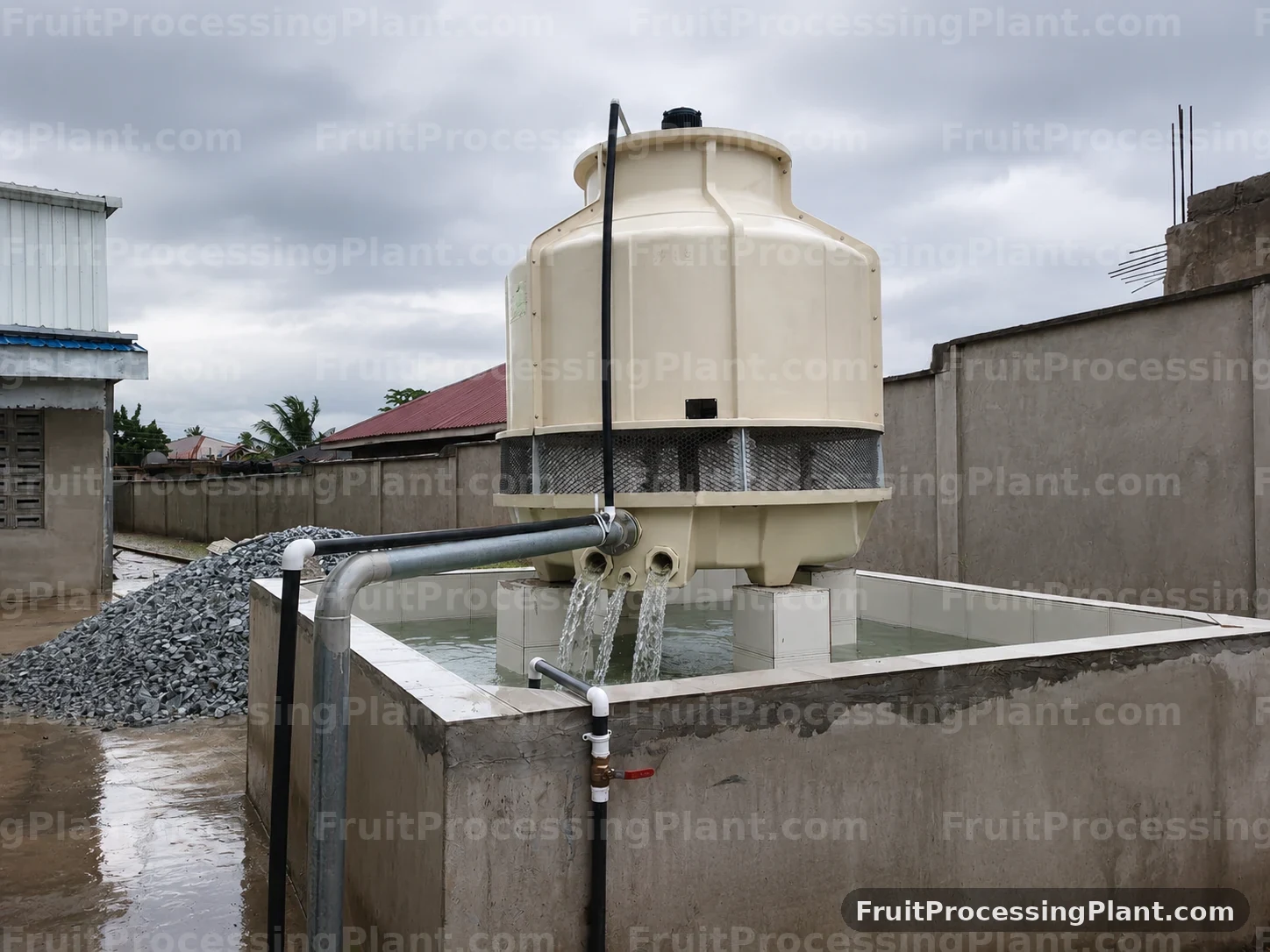
Chilled water unit for cooling duties in fruit processing plants.
For Chilled Water Unit RFQ, provide cooling duty, water temperatures, operating profile and water and ambient. These data are used to confirm the configuration, interfaces and quotation scope.
The position may vary according to finished product route, plant layout and sanitary design.
Control feed rate, inlet height and raw material condition before Chilled Water Unit so the machine receives a stable load without bridging or unnecessary product damage.
Check utility capacity, pressure, automation signals and installation interfaces because this module supports the stability of the complete line.
Confirm outlet height, pump or conveyor interface, buffer need and next-machine inlet so the section connects cleanly to the production line.
Provide access for inspection, drain-down and cleaning so product-contact parts can be maintained without excessive downtime.
Check utility capacity, pressure, automation signals and installation interfaces because this module supports the stability of the complete line.
Chilled Water Unit is commonly discussed for sterilizer cooling, beverage cooling, cold process support, utility integration. The goal is to make this module work as part of a complete fruit and vegetable processing line, not as an isolated catalogue item.
Utility and control equipment decides whether the processing line can run continuously after the main machines are installed. CIP, water treatment, chilled water, cooling tower, compressed air and PLC control should be sized from the full process route, not from one machine. Steam peaks, cooling load, valve air demand, wash water quality and recipe control can limit production even when the visible equipment looks complete.
For quotation, provide the plant voltage, available water, steam pressure, air compressor status, drainage plan, automation expectation and cleaning philosophy. A semi-automatic line and a recipe-controlled aseptic line need different valve groups, instruments, alarms and operator interfaces. Utility data is also needed for installation drawings, pipe routing and long-term operating cost estimates. The RFQ checklist below should be used to confirm the sizing data before quotation.
Related planning pages: CIP system for product-contact cleaning, PLC control system, and full process flow planning. Use them to compare equipment, plant routes and RFQ scope before final quotation.
The questions below reflect the actual engineering inputs for this equipment category. Reference values are useful for early discussion, but final sizing is confirmed from project data and samples or drawings where needed.
Provide process heat load or equipment list instead of selecting cooling capacity from production throughput alone.
Define required supply and return temperatures, flow, pressure and water quality.
State wet-bulb or design ambient, available space, noise limit, make-up water and power conditions.
Use this checklist when requesting a quote for Chilled Water Unit. If values are preliminary, mark them as reference only so the engineering team can show adjustable options.
| RFQ Field | What to Provide | Why It Matters |
|---|---|---|
| Cooling duty | Heat load in kW or equipment list with product flow, inlet and outlet temperatures. | Heat load is the basis for chiller or cooling-tower capacity. |
| Water temperatures | Required supply and return temperature, flow and pressure. | Temperature approach determines compressor, tower and heat-exchanger selection. |
| Operating profile | Hours per day, peak duration, seasonal ambient and redundancy requirement. | Operating profile affects staging and practical energy use. |
| Water and ambient | Water analysis, make-up supply, wet-bulb or design ambient, humidity and freeze risk. | Ambient and water quality affect tower and condenser performance. |
| Installation | Voltage, pump arrangement, pipe distance, indoor or outdoor location, noise limit and floor or roof loading. | Installation constraints change package and control configuration. |
Not directly. Cooling equipment should be sized from heat load, required temperatures and operating profile. Production throughput is useful only when the process heat balance is also known.
Provide design wet-bulb temperature, site altitude, humidity, water quality and required approach temperature. These conditions strongly affect tower size.
Yes. State pipe distance, pressure, equipment served and redundancy so circulation pumps, buffer volume and controls can be included in the scope.
Yes. Capacity, product-contact or container-contact parts, motor and drive selection, controls, guarding, inlet and outlet arrangement, platform and line interfaces can be configured from the project data listed on this page. Final scope is confirmed before manufacturing.
The same equipment name can cover different capacity, construction, controls, guarding, accessories and upstream or downstream interfaces. A fixed public price would hide those differences. The RFQ process confirms the required scope before a project quotation is prepared.
For a useful quotation, provide cooling duty, water temperatures, operating profile and water and ambient. Mark preliminary values as reference only.