
Product and sterile transfer
Define viscosity, particles, filling temperature and sterile connection from the upstream sterilizer.
Manufacture and supply double-head aseptic filling machines for higher-capacity aseptic bag filling of fruit puree, pulp, concentrate and sauce products.
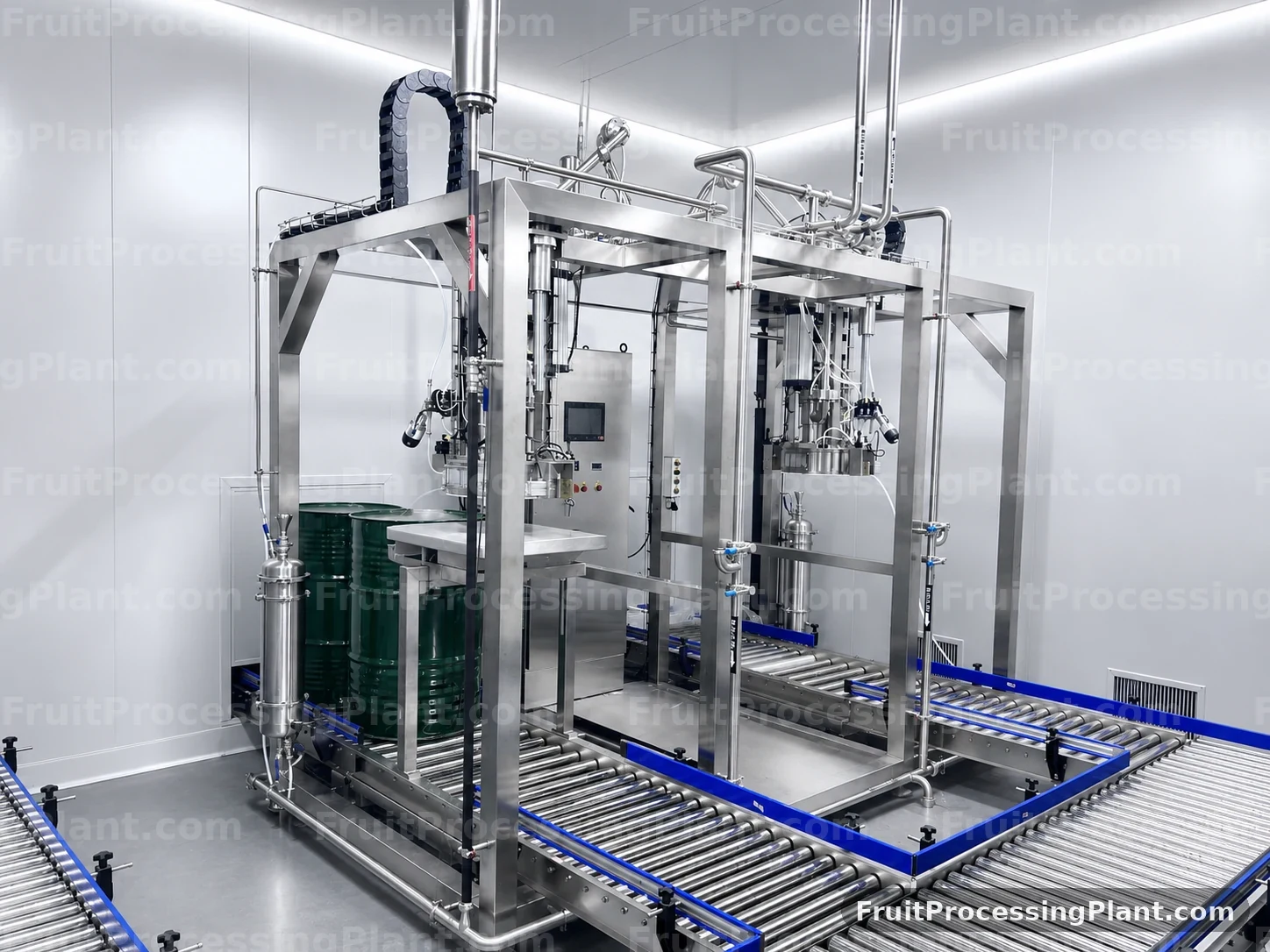
Double-head aseptic filling machine for higher-capacity aseptic bulk filling.
For Double-Head Aseptic Filling Machine RFQ, provide product properties, package and spout, capacity and head count and sterilizer interface. These data are used to confirm the configuration, interfaces and quotation scope.
The position may vary according to finished product route, plant layout and sanitary design.
Control feed rate, inlet height and raw material condition before Double-Head Aseptic Filling Machine so the machine receives a stable load without bridging or unnecessary product damage.
Review this step with product data, line layout and sanitary requirements so Double-Head Aseptic Filling Machine can be integrated without creating a bottleneck.
Confirm outlet height, pump or conveyor interface, buffer need and next-machine inlet so the section connects cleanly to the production line.
Provide access for inspection, drain-down and cleaning so product-contact parts can be maintained without excessive downtime.
Review this step with product data, line layout and sanitary requirements so Double-Head Aseptic Filling Machine can be integrated without creating a bottleneck.
Double-Head Aseptic Filling Machine is commonly discussed for large puree plants, aseptic drum filling, high-capacity concentrate filling, export ingredient projects. The goal is to make this module work as part of a complete fruit and vegetable processing line, not as an isolated catalogue item.
Filling equipment is selected after the product route and thermal process are clear. Aseptic bag filling is used for shelf-stable bulk products after sterilization, while bottle, can or non-aseptic filling may require hot filling, pasteurization or refrigerated distribution depending on the product. Package size, cap or spout type, filling temperature, viscosity and particles directly affect filling head, measurement method and conveyor design.
For aseptic lines, CIP and SIP logic, sterile chamber design, spout sterilization, steam quality and sterile transfer from the UHT system must be reviewed together. For retail packaging, container rinsing, capping, labeling, date coding and tunnel pasteurization may become part of the scope. State whether the package is bag-in-drum, bag-in-box, bottle, can, jar or pouch, and mark all package sizes as reference until final supplier drawings are confirmed. The RFQ checklist below should be used to confirm the sizing data before quotation.
Related planning pages: tubular sterilizer before filling, double-head aseptic filling machine, and send an equipment RFQ. Use them to compare equipment, plant routes and RFQ scope before final quotation.
The questions below reflect the actual engineering inputs for this equipment category. Reference values are useful for early discussion, but final sizing is confirmed from project data and samples or drawings where needed.
Define viscosity, particles, filling temperature and sterile connection from the upstream sterilizer.
Confirm bag-in-drum or bag-in-bin format, bag volume, spout type, container handling and expected filling accuracy.
Plan steam quality, sterile chamber, spout sterilization, SIP sequence, head count and changeover time as one system.
Use this checklist when requesting a quote for Double-Head Aseptic Filling Machine. If values are preliminary, mark them as reference only so the engineering team can show adjustable options.
| RFQ Field | What to Provide | Why It Matters |
|---|---|---|
| Product properties | Product name, filling temperature, viscosity, Brix, pulp and maximum particle size. | Product behavior determines valve, filling path and measurement method. |
| Package and spout | Bag-in-drum or bag-in-bin, nominal volume, bag supplier, spout type and drum or bin dimensions. | Bag and spout details determine clamping, sterilization and container handling. |
| Capacity and head count | Required bags per hour, product flow, operating hours and changeover schedule. | Cycle time determines single- or double-head configuration and buffer needs. |
| Sterilizer interface | Upstream sterilizer type, sterile transfer pressure, pipe size, filling temperature and back-pressure requirement. | The filler and sterilizer must operate as one sterile section. |
| SIP, CIP and utilities | Steam pressure and quality, sterile air, compressed air, power, CIP connection, SIP sequence and condensate drainage. | Sterile utilities and cleaning logic determine aseptic reliability. |
The review checks whether two filling heads improve package-change continuity and throughput without creating upstream flow, sterile header, conveyor or operator bottlenecks.
Use these checkpoints for early project evaluation. Final equipment selection requires confirmed product data, utility conditions and process requirements.
Direct answers below explain the decisions that change process scope, equipment selection and quotation quality.
Two heads can allow one station to fill while the other completes package change, helping the upstream sterile flow continue with fewer interruptions. The benefit depends on control logic, conveyor movement and operator readiness. It is not automatically twice the capacity because product flow, package weight and sterilizer output still limit total throughput.
The sterilizer must supply the combined average and peak filling demand under the chosen head sequence. If it is too small, the second head cannot create additional product flow. Buffer or diversion logic may also be required. Sterilizer, sterile pump, header and filler should therefore be sized from one common capacity and product basis.
The layout needs room for incoming empty drums or bins, bag preparation, both filling stations, weighing, discharge conveyors, operator access and maintenance. Sterile piping and utility connections need protected routes. Package turning or forklift movement should not interfere with hygienic access, so a machine footprint alone is insufficient for plant layout.
Different package sizes may be possible if mechanical supports, weighing ranges, bag connections, recipes and conveyor handling are designed for them. Running two formats simultaneously is a separate control and logistics question. The RFQ should identify drum and bin dimensions, target weights and whether changeover flexibility or simultaneous production is required.
Controls should coordinate sterile status, head selection, valve interlocks, fill weight, alarms, package presence and communication with the sterilizer and conveyors. Recipe access and event records may be required. The exact automation scope should be agreed with the plant PLC architecture so two independent local panels do not create unclear operating responsibility.
For a useful quotation, provide product properties, package and spout, capacity and head count and sterilizer interface. Mark preliminary values as reference only.