
01
Raw material receiving, washing and sorting
Check plum variety, ripeness and defect level before production. This stage affects pulp yield, fiber content and downstream destoning or refining stability.
Plum processing line for puree, pulp, juice base, jam base and aseptic bulk products, with route planning for destoning, peel control, acidity, color retention and heat treatment.
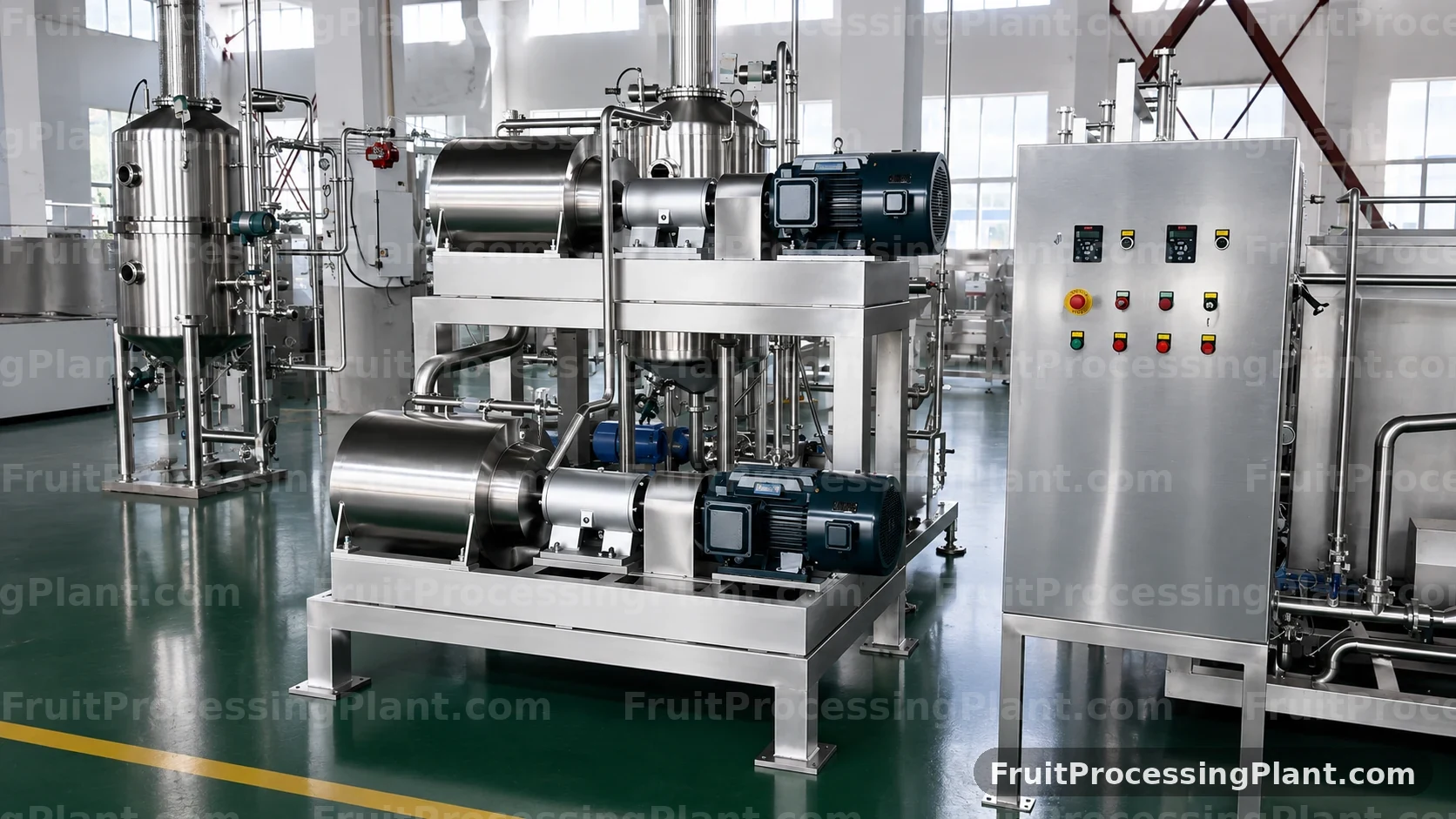
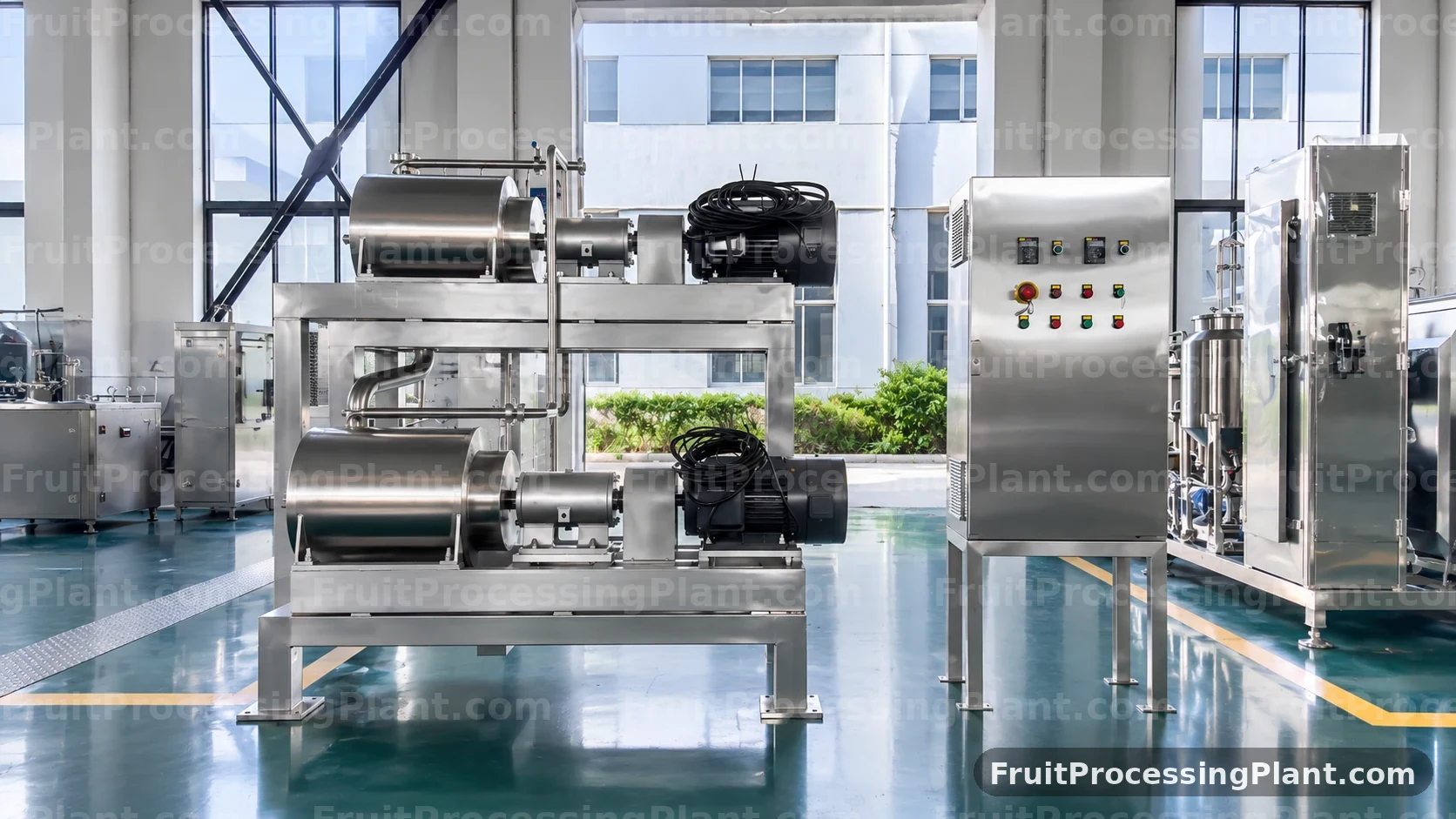
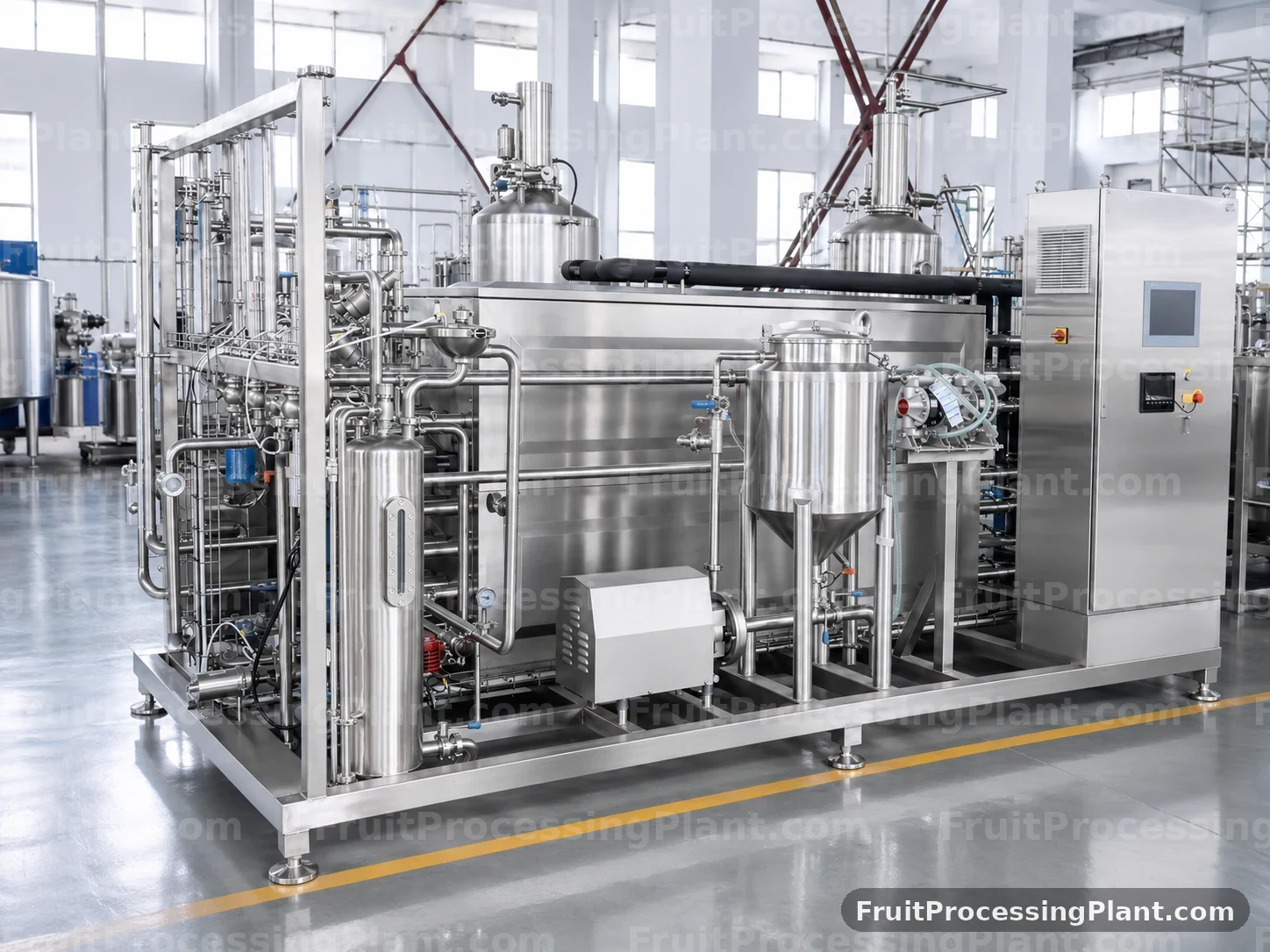
This plum line is planned for puree, pulp, juice base and aseptic bulk product projects. The core engineering scope is pretreatment, pulping, fiber control, deaeration, viscous-product heat treatment and hygienic filling.
The plum line is usually planned around peeling or destoning, pulp texture control, vacuum deaeration, viscous product sterilization and bulk aseptic filling.
Check plum variety, ripeness and defect level before production. This stage affects pulp yield, fiber content and downstream destoning or refining stability.
Trim the raw material to remove unwanted peel, core or damaged parts according to the target product route. Proper trimming reduces off-flavor, excess fiber and unnecessary downstream solids.
Pulping and refining control fiber, skin residue and puree smoothness. Screen size should be matched to whether the project targets plum puree, pulp or beverage base.
At this stage the product can be adjusted for Brix, solids, acidity, recipe balance or ingredient formulation. This is where the process is matched to the commercial product specification.
Heat treatment should be selected according to viscosity, particle level and shelf-life requirement. Tubular or other appropriate systems may be preferred for plum puree-type products.
The final filling route should match the sales channel and storage plan, such as aseptic bag, drum, bottle, can, jar or pouch. Packaging choice also affects the overall thermal process and quotation scope.
Different finished products lead to different equipment scope, utility demand, heat-treatment method and packaging logic.
Plum puree production focuses on screen selection, fiber control, deaeration and viscous-product sterilization.
Plum pulp routes keep more fruit body and should define target mouthfeel, particle level and packaging format.
Plum juice base routes may require dilution, blending, filtration or homogenization depending on the beverage application.
Aseptic plum product is suitable for industrial storage and export when long shelf life is required.
| Typical capacity | Industrial planning range depends on plum supply, working shift and final product route. |
| Finished products | Juice, puree, pulp, concentrate, sauce, beverage base or aseptic bulk product depending on project scope. |
| Key process decisions | Raw material condition, texture target, heat treatment method, packaging format and utility conditions. |
| Packaging options | Aseptic bag, drum, bottle, jar, pouch, can or bulk tank depending on shelf-life target. |
| Automation & cleaning | PLC + HMI operation, sanitary piping and CIP/SIP options can be discussed. |
Plum projects are different from peach projects because skin pigment, acidity, tannin/astringency and pit handling strongly affect the finished product route. The line should be designed for juice, puree or jam base rather than copied from a peach puree template.
Plum pits must be removed reliably without excessive pulp loss. Fruit firmness and pit adhesion vary by variety, so the pitting method should be matched to incoming fruit condition and expected capacity.
Plum skin contributes color and flavor but can also bring astringency or coarse particles. The project should define whether skin color is desired in puree or jam, or whether a smoother lighter product is required.
Plum products often require careful flavor balance for juice, puree or jam bases. Blending, sugar addition and concentration scope should be discussed if the line is intended for finished retail products instead of bulk pulp.
A plum line may feed jam, filling or fruit preparation production. In that case, heating, mixing, concentration and particle retention should be considered together with basic pulping.
Plum puree with skin particles may require a heat exchanger suited for suspended solids. Packaging can be aseptic bulk, jars, pouches or downstream ingredient tanks, each with different hygienic requirements.
Confirm plum variety, pit size, skin-in or skin-out target, juice/puree/jam route, acidity or sugar adjustment, particle tolerance, packaging format and seasonal production hours.
For a useful quotation, include the raw material condition, target product route, expected capacity, packaging format, available utilities and any quality requirement that affects equipment selection.
Each module should be selected according to raw material condition, target product route, capacity, cleaning requirement and final packaging plan.
This section prepares plum raw material before pulping and directly affects yield, fiber level and downstream refining stability.
The pulping section controls texture and removes coarse solids when producing plum puree or pulp.
Deaeration reduces air in the product stream and helps protect plum color and flavor before heat treatment.
Tubular heat treatment is commonly considered for viscous plum products where low-viscosity plate systems may not be ideal.
Aseptic filling supports long shelf life for bulk plum puree or pulp storage and export.
These answers help separate a real process route from a simple equipment list before quotation.
Provide raw material form, finished product, expected hourly capacity, operating season, Brix or solids data, pH if available, viscosity or texture target, fiber, seed or particle limits, package format, shelf-life target and utility conditions. If some values are not final, mark them as preliminary references. The quotation can then show a realistic process route instead of a generic machine list.
Some upstream equipment can be shared, especially washing, sorting and part of the extraction section. The downstream route may change once the product becomes plum puree, plum pulp, juice base, jam base and aseptic plum ingredient. Different products can require different pulper screens, heat treatment, evaporation, filling or storage conditions. For multi-product planning, list the main product first and treat other products as optional routes during quotation.
The cost is usually driven by capacity, product viscosity, required particle control, heat-treatment method, evaporation need, aseptic filling, automation level and utility scope. For this line, the sensitive items are stone removal, peel residue, tart flavor balance, color stability, viscosity and screen clogging. Those factors change stainless steel contact area, pump type, heat exchanger style, tank volume, cleaning design and installation work.
No. Any capacity, Brix, heat-treatment or utility value shown on the website should be treated as a planning reference only. Final specifications must be confirmed with raw material samples, buyer product standards, local sanitary requirements and factory layout. This is especially important when viscosity, seed content, fiber, acidity or heat sensitivity changes by variety and season.
Share the building size, floor drain position, available height, raw material receiving direction, packaging area, utility room, boiler or steam source, cooling water, compressed air and desired automation level. A practical layout should connect receiving, preparation, processing, filling, CIP and storage with enough operator access and cleaning space. Layout data also helps avoid quoting equipment that cannot be installed efficiently.
This section is written for RFQ preparation. Values are reference only until raw material tests, product specifications and final layout review confirm the process route.
Plum variety, ripeness and stone adhesion determine the difficulty of destoning and pulping. Peel and color compounds also affect product appearance.
The route normally includes washing, sorting, destoning, pulping or pressing, refining, deaeration, sterilization, optional concentration and filling.
The complete scope may include washing system, destoner, pulper, vacuum deaerator, tubular sterilizer, aseptic filler and CIP. Confirm steam, power, compressed air, cooling water, drainage, CIP level and automation requirement before judging price.
| RFQ Item | Reference Information to Provide | Engineering Reason |
|---|---|---|
| Finished products | plum puree, plum pulp, juice base, jam base and aseptic plum ingredient | Different products may share the same front end but require different pulping, heat treatment, filling and storage logic. |
| Critical concern | stone removal, peel residue, tart flavor balance, color stability, viscosity and screen clogging | This is usually where equipment sizing, material selection, cleaning design and quality risk become different from a generic line. |
| Capacity and season | Hourly intake, operating hours per day, harvest season or frozen raw material plan. | Capacity affects buffer tanks, utility peak load, staffing, front-end width and aseptic filler size. |
| Brix, pH, viscosity and particles | Use measured data when available. If not, mark values as preliminary planning references only. | These values decide pump type, heat exchanger style, deaeration, evaporation and filling behavior. |
| Packaging and shelf life | Aseptic drum, bag-in-bin, bottle, pouch, can, jar, frozen pack or chilled distribution. | Packaging changes sterilization, filling machine, SIP/CIP scope, logistics and finished product storage. |
Compare related equipment modules before defining the line scope and RFQ inputs.
Share your raw material, target product, capacity and contact details. The project team can review the process route and suggest suitable equipment modules for quotation discussion.