Juice plants
Juice plants focus on extraction, clarification or pulp stability, deaeration, pasteurization and filling. Clear juice, cloudy juice, NFC juice and concentrate use different downstream routes.
Turnkey fruit processing plants combine raw material receiving, washing, sorting, extraction, heat treatment, filling, CIP and PLC control. Use this page to match finished products with the right production lines and equipment modules.
A plant should be selected by finished product first, then by raw material behavior, capacity, packaging and utility conditions.
Juice plants focus on extraction, clarification or pulp stability, deaeration, pasteurization and filling. Clear juice, cloudy juice, NFC juice and concentrate use different downstream routes.
Puree plants focus on pulping, refining, deaeration, viscosity-aware sterilization and aseptic filling. Mango, guava, tomato and berry products need careful fiber and particle control.
Concentrate plants add evaporation, target Brix control, cooling and aseptic bulk filling. Utility planning and CIP become central because fouling and heat load increase.
| Processing Plant Type | Typical Finished Products | Related Line | Key Equipment Modules |
|---|---|---|---|
| Apple processing plant | Clear juice, cloudy juice, puree, concentrate | Apple processing line | Belt press juicer, deaerator, plate or tubular sterilizer, evaporator, aseptic filling |
| Tomato processing plant | Paste, puree, sauce base, passata-style product | Tomato processing line | Hot break or cold break, pulper, evaporator, tube-in-tube sterilizer, aseptic filler |
| Mango processing plant | Pulp, puree, nectar base, juice, concentrate | Mango processing line | Peeling and destoning, pulping, deaeration, tubular sterilizer, aseptic filling |
| Guava processing plant | Puree, pulp, nectar, juice | Guava processing line | Pulper, seed control, refiner, deaerator, tubular sterilizer |
| Pineapple processing plant | Juice, puree, chunks, crushed pineapple | Pineapple processing line | Washing, trimming, crushing, extraction, sterilization, filling |
| Fruit juice plant | Clear juice, cloudy juice, NFC juice, concentrate | Fruit juice processing line | Extractor, clarification, deaerator, sterilizer, evaporator and filling system |
| Fruit puree plant | Puree, pulp, paste, aseptic bulk products | Fruit puree processing line | Pulper, refiner, deaerator, tubular sterilizer, aseptic filler, CIP system |
Reference route: Receiving → Washing → Sorting → Crushing / Destoning / Pulping → Deaeration → Sterilization → Evaporation if needed → Filling → CIP.
Define raw material container, defect level, hourly intake and washing route before sizing the front end.
Remove unstable raw material and select crushing, destoning, peeling or trimming according to fruit structure.
Choose pressing, juicing, pulping or refining equipment based on finished product and fiber or seed requirement.
Control oxygen, foam, microbial risk and shelf-life requirements before filling.
Add evaporation only for concentrate, high-solids paste or ingredient-density routes.
Match the filling system with shelf life, packaging and sanitary control, then define CIP circuits and automation level.
Front-end cleaning and inspection protects yield, color, flavor and downstream equipment. It is the first plant section to size from raw material quality and hourly intake.
Hammer crushers or other preparation machines reduce raw material size before pressing, pulping, heating or enzyme treatment.
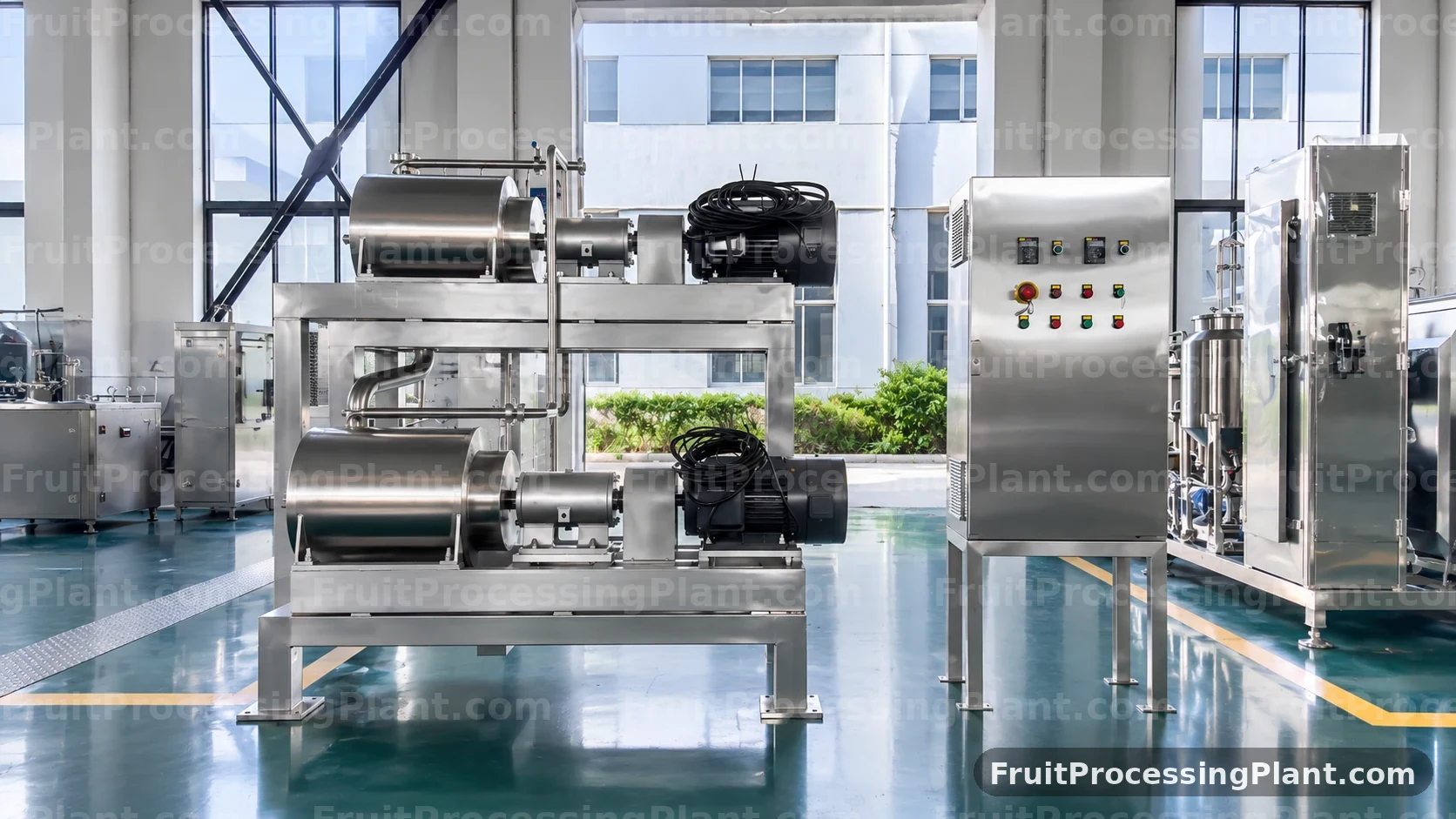
Pulpers and refiners control fiber, seed residue, peel fragments and particle size for puree, pulp and nectar-base products.
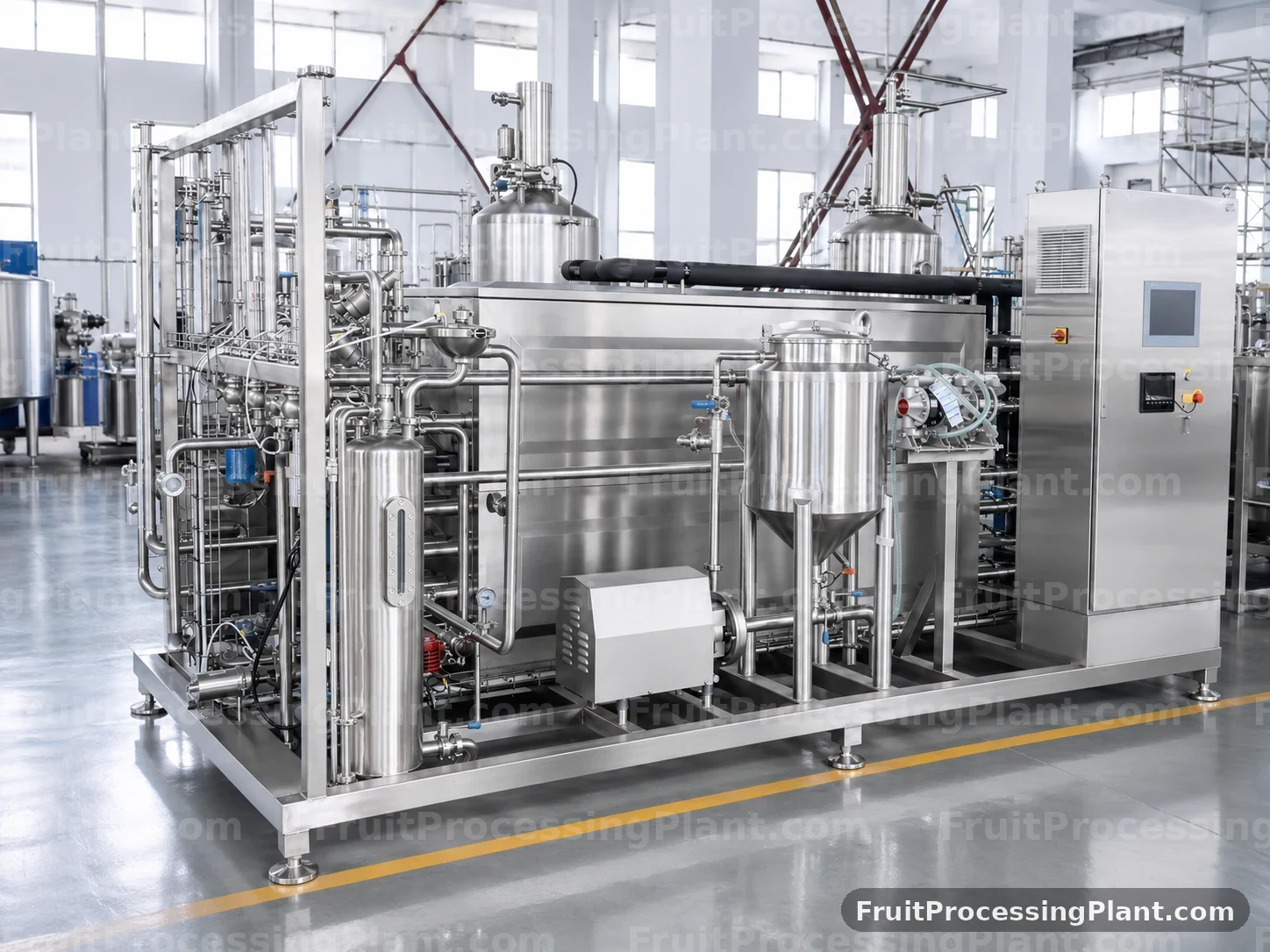
Tubular heat treatment is common for juice with pulp, puree, sauce and aseptic product routes where viscosity is higher than clear juice.
Evaporators remove water to reach target Brix for concentrate or paste products. Feed clarity, viscosity and fouling behavior matter.
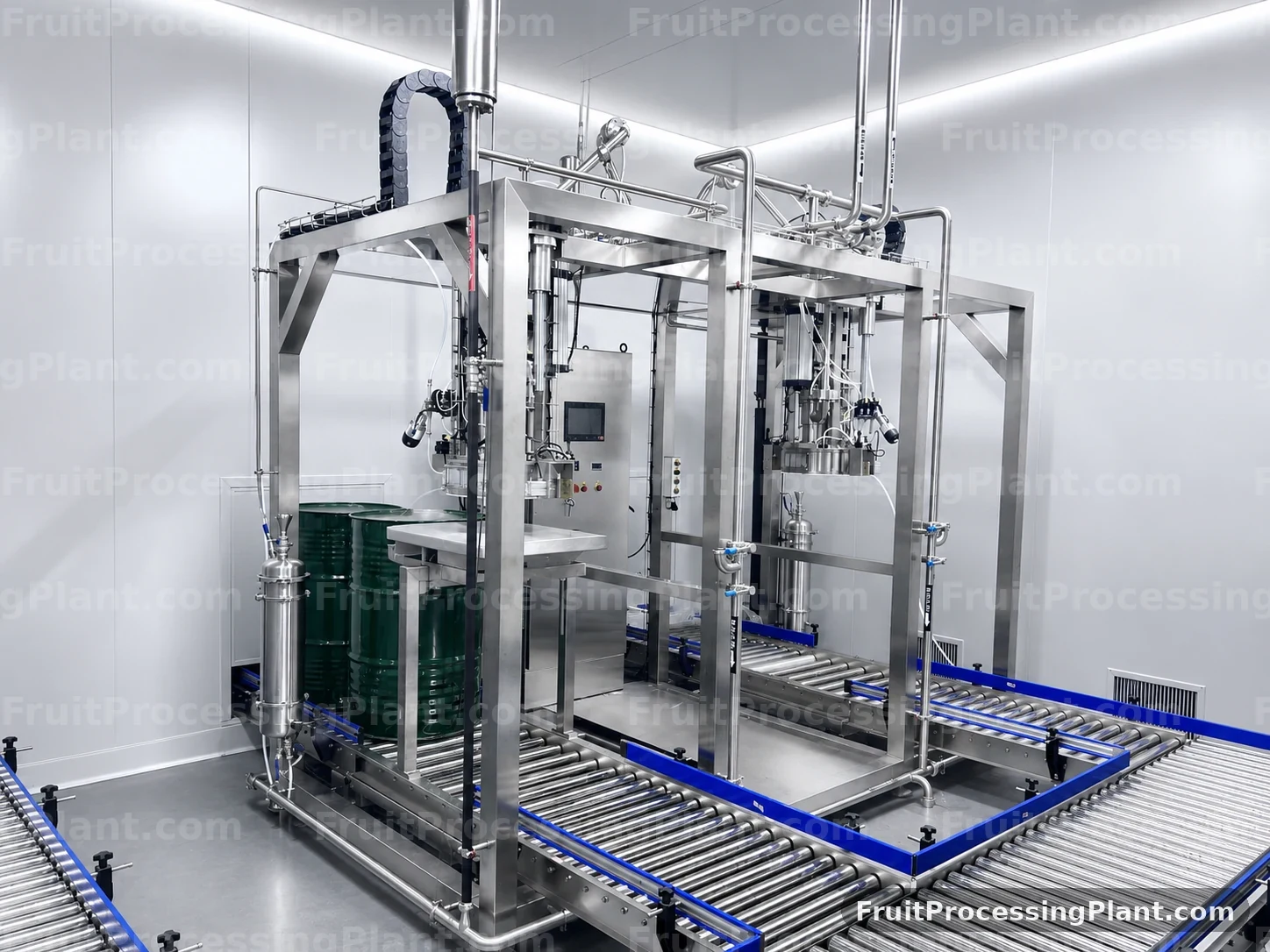
Aseptic bag filling is used for shelf-stable bulk packaging in drums, bins or large bags after sterile heat treatment and transfer.
Do not start with a machine list. Define juice, puree, concentrate, paste, IQF, jam, sauce or aseptic bulk product first, then select the process route.
Fruit variety, harvest season, defect rate, maturity, Brix and daily supply decide whether the plant should be flexible, compact, high-capacity or campaign-style.
Steam, power, compressed air, cooling water, drainage and floor layout can limit practical equipment choices. Share utility data before final quotation.
A turnkey plant can include receiving, washing, sorting, crushing or pulping, extraction, deaeration, heat treatment, evaporation if needed, filling, CIP, PLC control, installation and commissioning. The exact scope depends on the finished product, capacity, packaging format and utility conditions.
Sometimes, but shared equipment must match fruit structure and hygiene requirements. Apple pressing, mango pulping and passion fruit seed separation use different extraction logic. If a plant needs multiple fruits, define the priority fruit first and list future products separately.
Aseptic filling is considered when the product needs shelf-stable bulk packaging, such as puree, pulp, concentrate or paste in aseptic bags, drums or bins. It must be planned together with sterilization, sterile transfer and SIP, not as a stand-alone filler.
Send raw material, finished product, capacity, initial Brix, target Brix, viscosity, fiber or particle requirement, heat treatment, packaging, steam, power, compressed air, cooling water, CIP, factory layout, automation requirement and timeline.
Cost is estimated after the process route and equipment scope are defined. Capacity, Brix, viscosity, packaging, automation and utilities can change the configuration. Use the cost guide as a reference only, then send RFQ data for a project-specific quotation.
Use these links to move from process route to complete plant scope, cost drivers and equipment selection before sending RFQ data.
Compare related process, capacity, packaging and cost guides before defining the project scope and RFQ inputs.
Use these related guides to compare project scope, equipment options and RFQ inputs before requesting a quotation.
For a useful plant configuration, send raw material, finished product, capacity, Brix, viscosity, packaging, utility conditions, factory layout, automation requirement and timeline.