
01
Raw material classification and receiving
Identify fresh, frozen or dried goji and record the receiving condition before setting the preparation route, buffer plan and inspection points.
Goji berry processing line for juice, puree, extract base, concentrate and aseptic ingredient products, configured for delicate berries, seed and skin control, color retention and drying-origin raw material options.
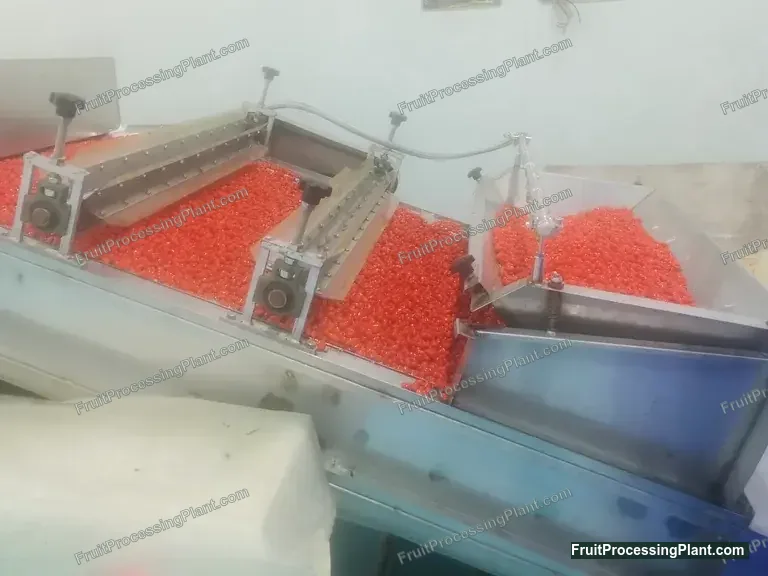
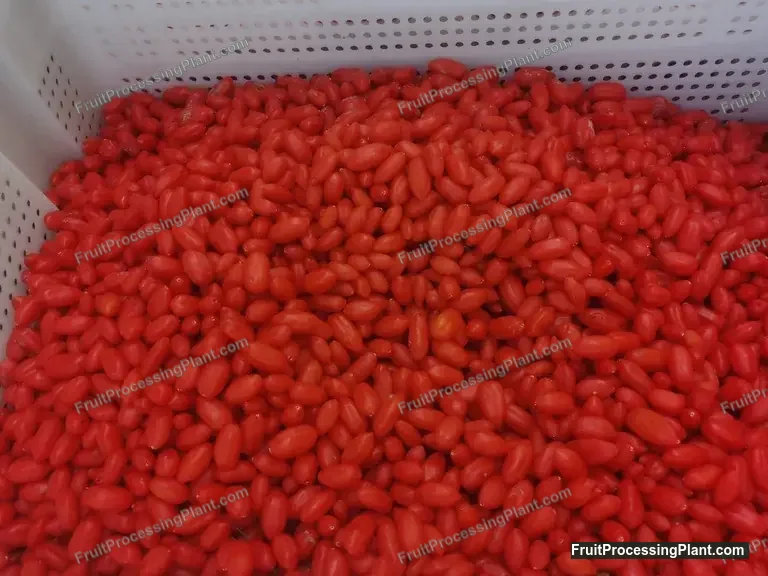

This goji berries line is planned for delicate or specialty fruit products where color, aroma, seed/skin control and heat exposure are important. The line can support puree, juice, sauce, concentrate or aseptic bulk product routes.
The preparation route depends on the incoming material and the finished-product target. Fresh or frozen fruit and dried goji should not be assigned one generic receiving and extraction sequence.
Identify fresh, frozen or dried goji and record the receiving condition before setting the preparation route, buffer plan and inspection points.
Fresh fruit may enter washing and inspection, frozen fruit needs a defined thawing and drainage route, and dried material may need cleaning and rehydration based on representative material behavior.
Use pulping and refining when the target retains fruit body. Use soaking or controlled extraction followed by separation when the target is a filtered extract or ingredient stream.
Set screens, finishing or filtration from the buyer's texture and solids endpoint. Sample review is needed before fixing separation duty or recovery expectations.
Confirm product data, oxygen sensitivity, feed and target solids, shelf-life objective and package before selecting deaeration, concentration and thermal equipment.
Match bulk or retail filling to the confirmed puree, juice, extract or concentrate route and the intended distribution and storage plan.
Different finished products lead to different equipment scope, utility demand, heat-treatment method and packaging logic.
Goji Berries puree needs careful color protection and seed/skin management.
Goji Berries juice routes focus on aroma retention, separation and filling stability.
Goji Berries sauce-type products require cooking, viscosity control and product body management.
Goji Berries concentrate routes need careful heat management to protect color and flavor.
| Typical capacity | Industrial planning range depends on goji berries supply, working shift and final product route. |
| Finished products | Juice, puree, pulp, concentrate, sauce, beverage base or aseptic bulk product depending on project scope. |
| Key process decisions | Raw material condition, texture target, heat treatment method, packaging format and utility conditions. |
| Packaging options | Aseptic bag, drum, bottle, jar, pouch, can or bulk tank depending on shelf-life target. |
| Automation & cleaning | PLC + HMI operation, sanitary piping and CIP/SIP options can be discussed. |
Goji berry projects often use fresh, dried or rehydrated raw material, so extraction and washing logic can be different from fresh berry puree lines. The line should define whether the target is juice, puree, extract or concentrate.
Fresh goji requires gentle washing and pulping; dried goji may need soaking, rehydration or extraction. The raw material form changes tank sizing, residence time and solids handling.
If the target is extract, the line may require controlled soaking, heating and filtration rather than simple pulping. Extraction yield and active-component targets should be discussed before equipment sizing.
Goji skin and seeds can remain in puree or be reduced for smoother beverage base. Screen selection and filtration depend on final product specification.
Goji concentrate or extract may be packed as aseptic bulk, drum or smaller ingredient package. Concentration method and final solids should be confirmed.
Goji color and flavor can be sensitive to heat and oxygen. Deaeration and controlled thermal exposure may be useful for premium products.
Confirm fresh/dried/frozen raw material, extraction or puree route, soaking requirement, solids target, filtration level, final concentration, packaging and capacity.
For a useful quotation, include the raw material condition, target product route, expected capacity, packaging format, available utilities and any quality requirement that affects equipment selection.
Each module should be selected according to raw material condition, target product route, capacity, cleaning requirement and final packaging plan.
Provides relatively gentle washing for delicate berry raw material.
Helps remove unsuitable berries before crushing or pulping.
Controls seed and skin content in berry puree or sauce routes.
Useful for viscous berry puree or sauce products requiring stable heat treatment.
Supports long shelf life for berry puree or concentrate in industrial bulk packaging.
These answers help separate a real process route from a simple equipment list before quotation.
They may share some refining, thermal-treatment and filling equipment, but their front ends are different. Fresh or frozen fruit normally needs washing or controlled thawing, while dried goji may need cleaning, soaking and rehydration before pulping or extraction. The RFQ should list each raw material form and the intended operating campaign separately.
Pulping is considered when the target retains fruit body for puree or beverage base. An extraction route is considered when the buyer needs a filtered extract or ingredient stream after soaking or controlled heating. The choice should be based on the finished-product specification and sample behavior, not on the crop name alone.
The buyer should define whether visible solids are acceptable and provide a target texture or filtration endpoint. Pulper screens, finishers or filters can then be discussed without assuming that maximum solids removal is always desirable. Sample review is needed before a recovery or filtration result is treated as a project value.
Provide raw material condition, holding-time limits, acceptable oxygen exposure, product color priority, packaging route and any measured pH, solids or viscosity data. These inputs guide closed transfer, deaeration, heat exposure and buffer planning. The website does not set a guaranteed retention value without project testing.
Send fresh, frozen, dried or rehydrated material details; the puree, juice, extract or concentrate target; expected intake and schedule; seed and skin limits; filtration endpoint; measured product data when available; package format; utilities; cleaning expectations and factory layout. Mark preliminary values clearly until samples and product standards are confirmed.
This section is written for RFQ preparation. Values are reference only until raw material tests, product specifications and final layout review confirm the process route.
Goji may be processed fresh, frozen or rehydrated from dried material. Each form changes washing, hydration, extraction, filtration and microbial risk.
The route may include washing, rehydration if needed, pulping or extraction, seed and skin refining, deaeration, concentration where required, sterilization and filling.
The complete scope may include washing system, hydration tank, pulper, filter or finisher, vacuum deaerator, tubular sterilizer and aseptic filler. Confirm steam, power, compressed air, cooling water, drainage, CIP level and automation requirement before judging price.
This crop-specific review separates the main process decisions before capacity and equipment are finalized.
| Design Checkpoint | Reference Data or Decision | Effect on the Line |
|---|---|---|
| Raw material form | State whether goji arrives fresh, frozen, dried or already rehydrated, and describe the receiving condition for each campaign. | The input form changes washing, thawing or soaking, buffer volume, residence-time review and microbial-control boundaries. |
| Puree or extraction route | Define whether the main product is puree, juice, extract base or concentrate before choosing pulping, soaking and filtration equipment. | The product route changes solids handling, screen or filter duty, tank sequence and the optional concentration branch. |
| Seed, skin and oxygen target | Provide acceptable seed and skin content, the filtration endpoint, color priority and packaging route. | These targets guide refining, deaeration, holding-time control, heat treatment and filling interfaces. |
| RFQ Item | Reference Information to Provide | Engineering Reason |
|---|---|---|
| Finished products | goji berry juice, puree, extract base, concentrate and aseptic goji ingredient | Different products may share the same front end but require different pulping, heat treatment, filling and storage logic. |
| Critical concern | rehydration, seed and skin load, color protection, extraction yield, filtration, oxidation and heat exposure | This is usually where equipment sizing, material selection, cleaning design and quality risk become different from a generic line. |
| Capacity and season | Hourly intake, operating hours per day, harvest season or frozen raw material plan. | Capacity affects buffer tanks, utility peak load, staffing, front-end width and aseptic filler size. |
| Brix, pH, viscosity and particles | Use measured data when available. If not, mark values as preliminary planning references only. | These values decide pump type, heat exchanger style, deaeration, evaporation and filling behavior. |
| Packaging and shelf life | Aseptic drum, bag-in-bin, bottle, pouch, can, jar, frozen pack or chilled distribution. | Packaging changes sterilization, filling machine, SIP/CIP scope, logistics and finished product storage. |
Compare related equipment modules before defining the line scope and RFQ inputs.
Share your raw material, target product, capacity and contact details. The project team can review the process route and suggest suitable equipment modules for quotation discussion.