01
Raw material classification, washing and inspection
Identify fresh jujube, dried or rehydrated jujube, or dates before setting the receiving route. Inspect condition, foreign material and pit-handling needs before processing.
Jujube and date processing line for paste, puree, syrup base, beverage ingredient and aseptic products, with route planning for soaking, destoning, pulping, fiber control and high-solids handling.
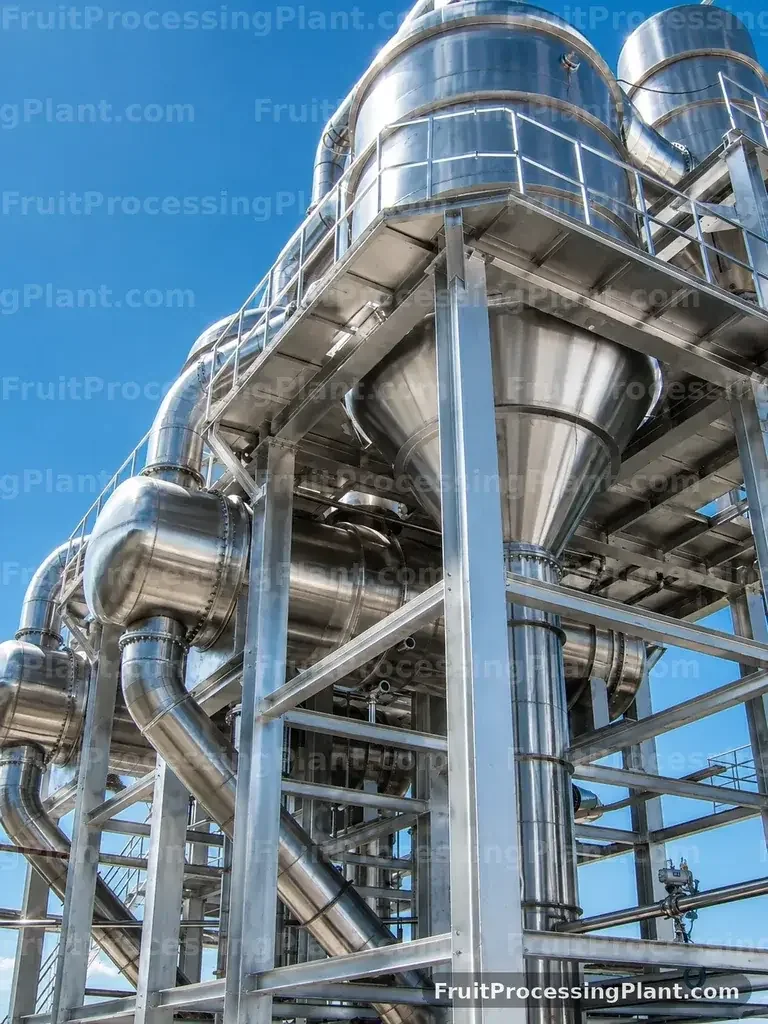
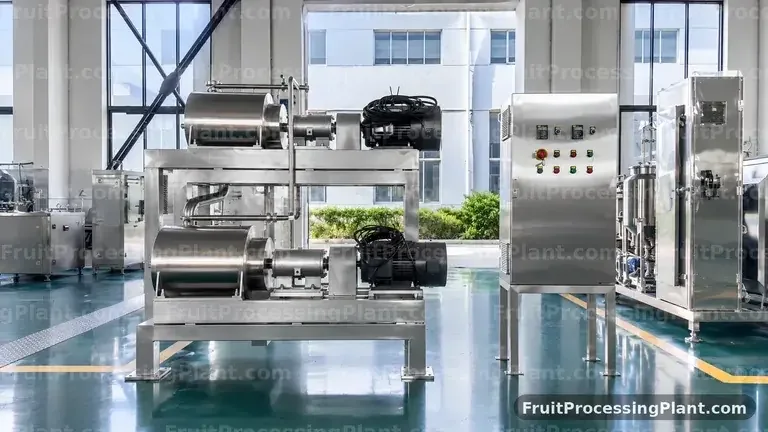
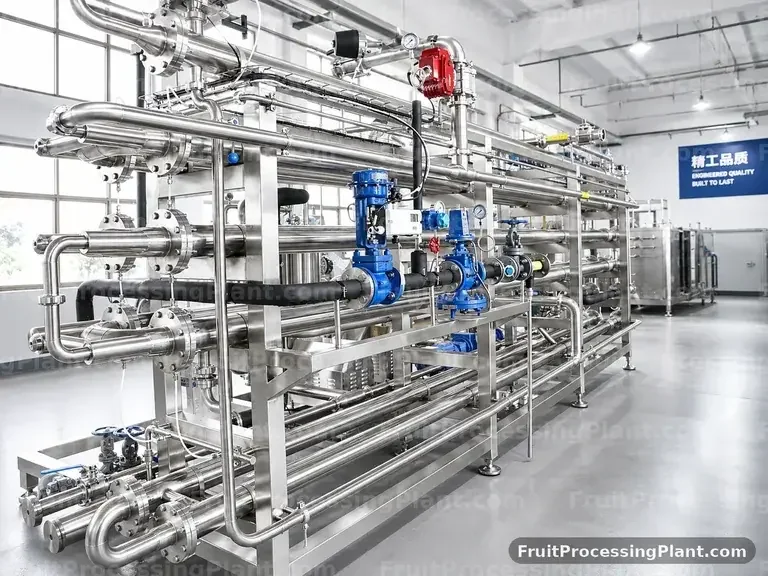
This jujube / date line is planned for delicate or specialty fruit products where color, aroma, seed/skin control and heat exposure are important. The line can support puree, juice, sauce, concentrate or aseptic bulk product routes.
The route starts by classifying the raw material and target product. Fresh fruit, dried fruit, paste and extract projects do not use one interchangeable preparation sequence.
Identify fresh jujube, dried or rehydrated jujube, or dates before setting the receiving route. Inspect condition, foreign material and pit-handling needs before processing.
Remove pits before fine pulping or pumping and define how hard fragments will be inspected. The preparation and waste-discharge boundary should be stated in the quotation scope.
Dried material may need soaking or controlled softening before pulping or extraction. Tank volume and holding conditions should be based on the buyer's material and sample review.
Paste and puree routes retain more pulp solids through pulping and refining. Extract routes use soaking or controlled heating followed by filtration, so the two routes require different tanks and separation duties.
Confirm measured solids, viscosity, product standard and package before selecting concentration, blending and thermal equipment. Website guidance is a planning framework rather than a final process schedule.
Match bulk or retail filling to the confirmed product route, shelf-life target and distribution plan. The filling choice sets the downstream hygienic and storage boundary.
Different finished products lead to different equipment scope, utility demand, heat-treatment method and packaging logic.
Jujube / Date puree needs careful color protection and seed/skin management.
Jujube / Date juice routes focus on aroma retention, separation and filling stability.
Jujube / Date sauce-type products require cooking, viscosity control and product body management.
Jujube / Date concentrate routes need careful heat management to protect color and flavor.
| Typical capacity | Industrial planning range depends on jujube / date supply, working shift and final product route. |
| Finished products | Juice, puree, pulp, concentrate, sauce, beverage base or aseptic bulk product depending on project scope. |
| Key process decisions | Raw material condition, texture target, heat treatment method, packaging format and utility conditions. |
| Packaging options | Aseptic bag, drum, bottle, jar, pouch, can or bulk tank depending on shelf-life target. |
| Automation & cleaning | PLC + HMI operation, sanitary piping and CIP/SIP options can be discussed. |
Jujube and date projects often process dried or semi-dried fruit, so soaking, pitting and extraction are more important than fresh fruit washing alone. The line can target paste, syrup, extract or beverage base.
Dried fruit may need soaking, softening and solids extraction before pulping. Fresh fruit routes may focus more on washing and pitting. The raw material form must be clear in the RFQ.
Pits are hard and must be removed before fine pulping or pumping. Pitting accuracy, waste discharge and inspection are key layout points.
Jujube/date extract routes use soaking, heating and filtration, while paste routes retain more pulp solids. These two routes need different tanks, screens and heat treatment.
Date paste or syrup can be viscous and sticky. Pump selection, heat exchanger type and cleaning sequence should account for sugar-rich product behavior.
Bulk paste, extract concentrate and beverage base may use different packaging. Filling accuracy, hot fill or aseptic option should be matched to shelf-life requirement.
Confirm jujube/date type, moisture level, pitting requirement, soaking time, paste/extract route, target solids, packaging, capacity and cleaning expectation.
For a useful quotation, include the raw material condition, target product route, expected capacity, packaging format, available utilities and any quality requirement that affects equipment selection.
Each module should be selected according to raw material condition, target product route, capacity, cleaning requirement and final packaging plan.
Provides relatively gentle washing for delicate berry raw material.
Helps remove unsuitable berries before crushing or pulping.
Controls seed and skin content in berry puree or sauce routes.
Useful for viscous berry puree or sauce products requiring stable heat treatment.
Supports long shelf life for berry puree or concentrate in industrial bulk packaging.
These answers help separate a real process route from a simple equipment list before quotation.
Some downstream pulping, thermal-treatment and filling modules may be shared, but the preparation route is different. Fresh fruit emphasizes washing and pitting, while dried fruit may require soaking or softening first. The buyer should provide each material condition and planned campaign so shared and separate modules can be identified.
Pits are hard solids that can interfere with fine pulping, pumping and downstream equipment. The quotation should define the pitting boundary, waste discharge, inspection access and acceptable hard-fragment condition. Final acceptance criteria require the buyer's product standard and agreed test method.
Paste and puree routes retain more fruit solids and therefore place more emphasis on pulping, refining, viscous transfer and cleaning. Extract routes use soaking or controlled heating followed by filtration and may add a concentration branch. The target product must be chosen before tanks and separation equipment are sized.
Higher solids can change viscosity, pump behavior, heat transfer, fouling and cleaning time. Provide measured solids and viscosity at a stated temperature, together with particle and package information. Those project inputs are needed before a pump, heat exchanger or concentration method is confirmed.
Send the raw material class and condition, moisture or solids data when available, pitting requirement, soaking or softening need, paste or extract target, texture and filtration endpoint, intake schedule, package, utilities, cleaning expectation and layout. Mark preliminary values until representative material and product standards are reviewed.
This section is written for RFQ preparation. Values are reference only until raw material tests, product specifications and final layout review confirm the process route.
Fresh and dried jujube or date materials behave differently. Dried fruit may need soaking and softening, while pits and skins must be controlled before fine pulping.
The route may include washing, soaking or softening, destoning, pulping, refining, concentration or blending, heat treatment and filling.
The complete scope may include washing system, soaking tank, destoner, pulper, forced circulation evaporator, tube-in-tube sterilizer and aseptic filler. Confirm steam, power, compressed air, cooling water, drainage, CIP level and automation requirement before judging price.
This crop-specific review separates the main process decisions before capacity and equipment are finalized.
| Design Checkpoint | Reference Data or Decision | Effect on the Line |
|---|---|---|
| Raw material class | Separate fresh jujube, dried or rehydrated jujube and dates, and provide condition, moisture or solids data when available. | The material class changes receiving, washing, soaking or softening, buffer time and the route into pitting or extraction. |
| Pitting and hard solids | Define the pit-removal boundary, inspection method and acceptable hard-fragment condition before fine pulping or pumping. | The decision affects preparation equipment, waste discharge, downstream protection, inspection access and cleaning. |
| Paste or extract route | Choose paste, puree, extract or syrup base and provide target solids, texture and packaging information. | Paste retains more pulp solids, while extract routes place more duty on soaking, filtration, concentration and tank sequencing. |
| RFQ Item | Reference Information to Provide | Engineering Reason |
|---|---|---|
| Finished products | jujube paste, date paste, syrup base, puree, beverage base and aseptic ingredient | Different products may share the same front end but require different pulping, heat treatment, filling and storage logic. |
| Critical concern | soaking time, pit removal, sugar solids, high viscosity, skin residue, heat fouling and pump selection | This is usually where equipment sizing, material selection, cleaning design and quality risk become different from a generic line. |
| Capacity and season | Hourly intake, operating hours per day, harvest season or frozen raw material plan. | Capacity affects buffer tanks, utility peak load, staffing, front-end width and aseptic filler size. |
| Brix, pH, viscosity and particles | Use measured data when available. If not, mark values as preliminary planning references only. | These values decide pump type, heat exchanger style, deaeration, evaporation and filling behavior. |
| Packaging and shelf life | Aseptic drum, bag-in-bin, bottle, pouch, can, jar, frozen pack or chilled distribution. | Packaging changes sterilization, filling machine, SIP/CIP scope, logistics and finished product storage. |
Compare related equipment modules before defining the line scope and RFQ inputs.
Use these links to move from process route to complete plant scope, cost drivers and equipment selection before sending RFQ data.
Share your raw material, target product, capacity and contact details. The project team can review the process route and suggest suitable equipment modules for quotation discussion.