
Pulp texture
Set the required pulp texture and particle profile before choosing first-stage and refining screen openings.
A double stage pulping machine separates pulp from peel, seeds and coarse fiber through screens. It is a key equipment module in mango, guava, tomato, berry and tropical fruit puree lines.
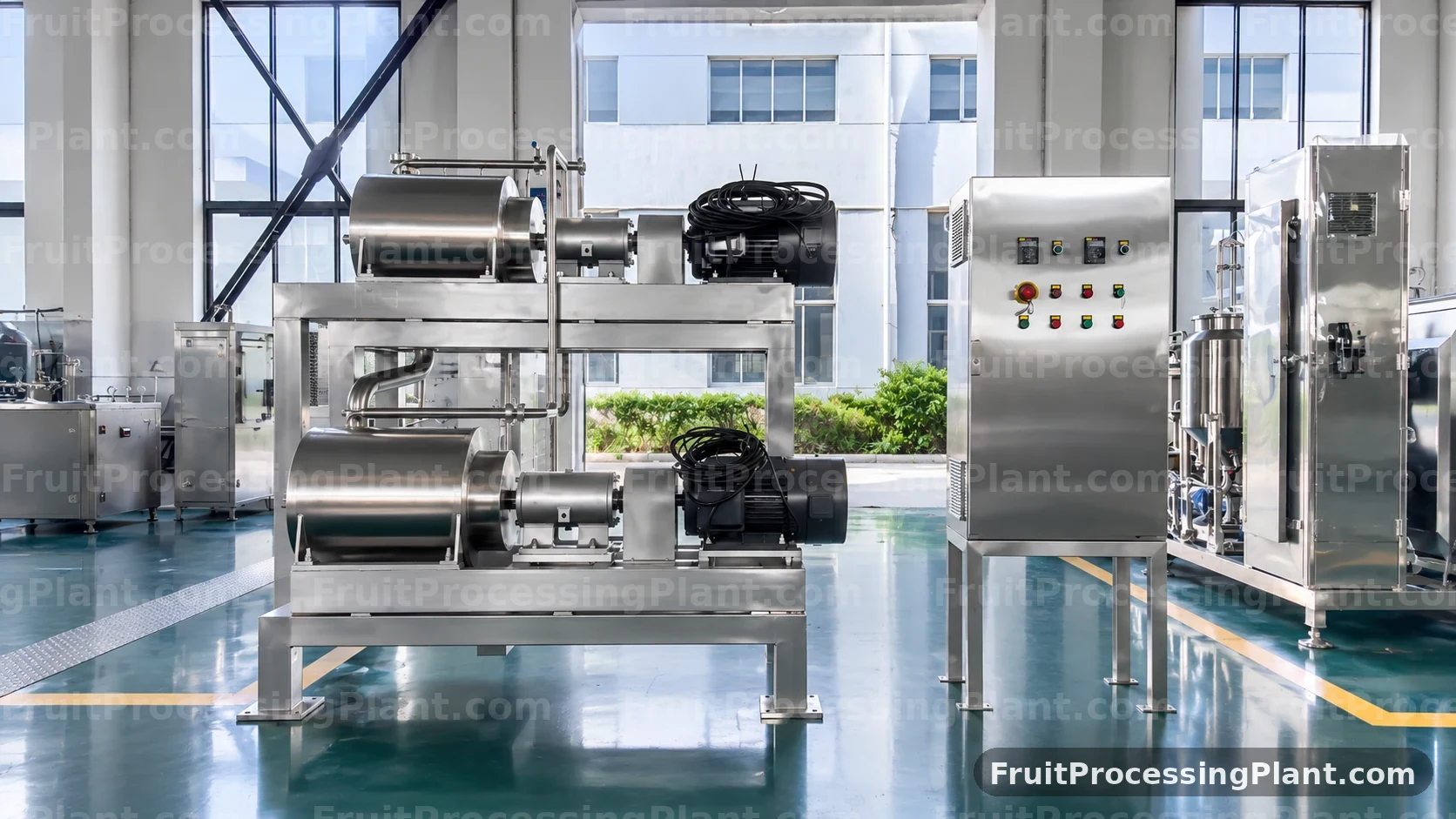
Double stage pulping machine for fruit puree, pulp and seed or peel separation.
For Double Stage Pulping Machine RFQ, provide feed material, pulp texture, seed, peel and fiber limits and capacity and yield. These data are used to confirm the configuration, interfaces and quotation scope.
The position may vary according to finished product route, plant layout and sanitary design.
Control feed rate, inlet height and raw material condition before Double Stage Pulping Machine so the machine receives a stable load without bridging or unnecessary product damage.
Match screen opening, rotor action and waste discharge to the required pulp texture, seed removal and fiber control target.
Match screen opening, rotor action and waste discharge to the required pulp texture, seed removal and fiber control target.
Confirm outlet height, pump or conveyor interface, buffer need and next-machine inlet so the section connects cleanly to the production line.
Confirm outlet height, pump or conveyor interface, buffer need and next-machine inlet so the section connects cleanly to the production line.
Double Stage Pulping Machine is commonly discussed for mango puree processing, guava and berry pulp refining, tomato pulp and sauce preparation, fruit puree before sterilization and aseptic filling. The goal is to make this module work as part of a complete fruit and vegetable processing line, not as an isolated catalogue item.
Pulping equipment separates usable pulp from seeds, skins, fibers and coarse residues through the relationship between rotor action and screen opening. For puree or pulp products, this section decides texture, yield, residue load and the stability of later heat treatment. A two-stage pulper is often considered when the first stage removes larger waste and the second stage refines the pulp to a more consistent particle profile.
Sizing should consider whether the fruit is cold, blanched or pre-heated, whether stone or seed removal is required, and whether the finished product is puree, nectar base, jam base or aseptic bulk ingredient. Screen hole size, rotor speed, feeding pressure, waste discharge and cleaning access must be reviewed together because a higher pulp yield is not useful if seed fragments or peel fines create quality complaints. The RFQ checklist below should be used to confirm the sizing data before quotation.
Related planning pages: mango pulp processing route, guava puree route, and tube-in-tube sterilizer for viscous puree. Use them to compare equipment, plant routes and RFQ scope before final quotation.
The questions below reflect the actual engineering inputs for this equipment category. Reference values are useful for early discussion, but final sizing is confirmed from project data and samples or drawings where needed.
Set the required pulp texture and particle profile before choosing first-stage and refining screen openings.
Define separate limits for seed fragments, peel, stones and coarse fiber because one generic residue target is not sufficient.
State whether fruit is cold, crushed, blanched or preheated because temperature and consistency change pulping capacity and yield.
Use this checklist when requesting a quote for Double Stage Pulping Machine. If values are preliminary, mark them as reference only so the engineering team can show adjustable options.
| RFQ Field | What to Provide | Why It Matters |
|---|---|---|
| Feed material | Fruit type, maturity, crushed or whole condition, feed temperature and any preheating or destoning step. | Feed preparation affects rotor load, pulp release and screen capacity. |
| Pulp texture | Required pulp fineness, screen opening preference and downstream product such as puree, nectar base or jam base. | Pulp texture determines screen selection and whether a second refining stage is needed. |
| Seed, peel and fiber limits | Allowable seed fragments, peel specks, stone risk, coarse fiber and residue moisture. | Separation targets drive rotor, screen and waste-discharge configuration. |
| Capacity and yield | Raw feed kg/h or t/h, expected pulp yield, operating hours and seasonal schedule. | Feed rate and yield determine screen area, motor load and buffer requirements. |
| Cleaning and interface | Previous crusher or preheater, next tank or sterilizer, outlet height, voltage, wash water, drainage and screen-change access. | Cleaning and interface details affect downtime, hygiene and layout. |
The review checks whether two refining stages improve seed, skin and fiber control while protecting useful pulp yield, particle specification, maintenance access and cleaning.
Use these checkpoints for early project evaluation. Final equipment selection requires confirmed product data, utility conditions and process requirements.
Direct answers below explain the decisions that change process scope, equipment selection and quotation quality.
Two stages allow coarse separation and finer refining to be controlled independently. The first stage can remove larger skin, seed or fiber, while the second targets final texture. This arrangement may improve stability and screen management, but it should be justified by raw material and product specification because another stage also adds power, wear parts and cleaning.
Screen openings are selected from fruit structure, seed dimensions, desired fiber and allowable particles. The second screen is not simply the smallest available size. Excessively fine refining can reduce yield, break seeds, increase residue moisture and load the machine. Representative fruit trials or documented samples support a better selection than generic product names.
It may process both with suitable preparation, screens and operating settings, but their separation duties differ. Mango requires stone removal before pulping, while guava needs hard-seed control and careful refining. Change parts, cleaning and wear should be considered. The shared machine must satisfy the more demanding particle and passage requirement.
Common causes include unsuitable screen openings, worn or incorrect rotor clearance, unstable feed, poor fruit maturity, excessive throughput and insufficient first-stage preparation. Reprocessing residue may recover more pulp but can add unwanted fiber or seed fragments. Yield troubleshooting should measure residue moisture and finished-pulp quality together rather than recovery alone.
Provide space to open covers, remove screens and rotors, inspect seals, lift wear parts and wash product-contact surfaces safely. Feed and discharge piping should not block service access. Drainage, platforms and lifting points may be required. Maintenance clearance should be shown on the plant layout before surrounding tanks and walls are fixed.
For a useful quotation, provide feed material, pulp texture, seed, peel and fiber limits and capacity and yield. Mark preliminary values as reference only.