
Product rheology
Use measured pH, Brix, viscosity, pulp and particle size to choose plate, tubular, tube-in-tube or retort treatment.
Manufacture and supply tubular sterilizers for continuous heat treatment of juice, puree, pulp, sauce and aseptic processing lines. Configure holding time, tube structure, flow rate, viscosity, particles, CIP and filling interface from product data.
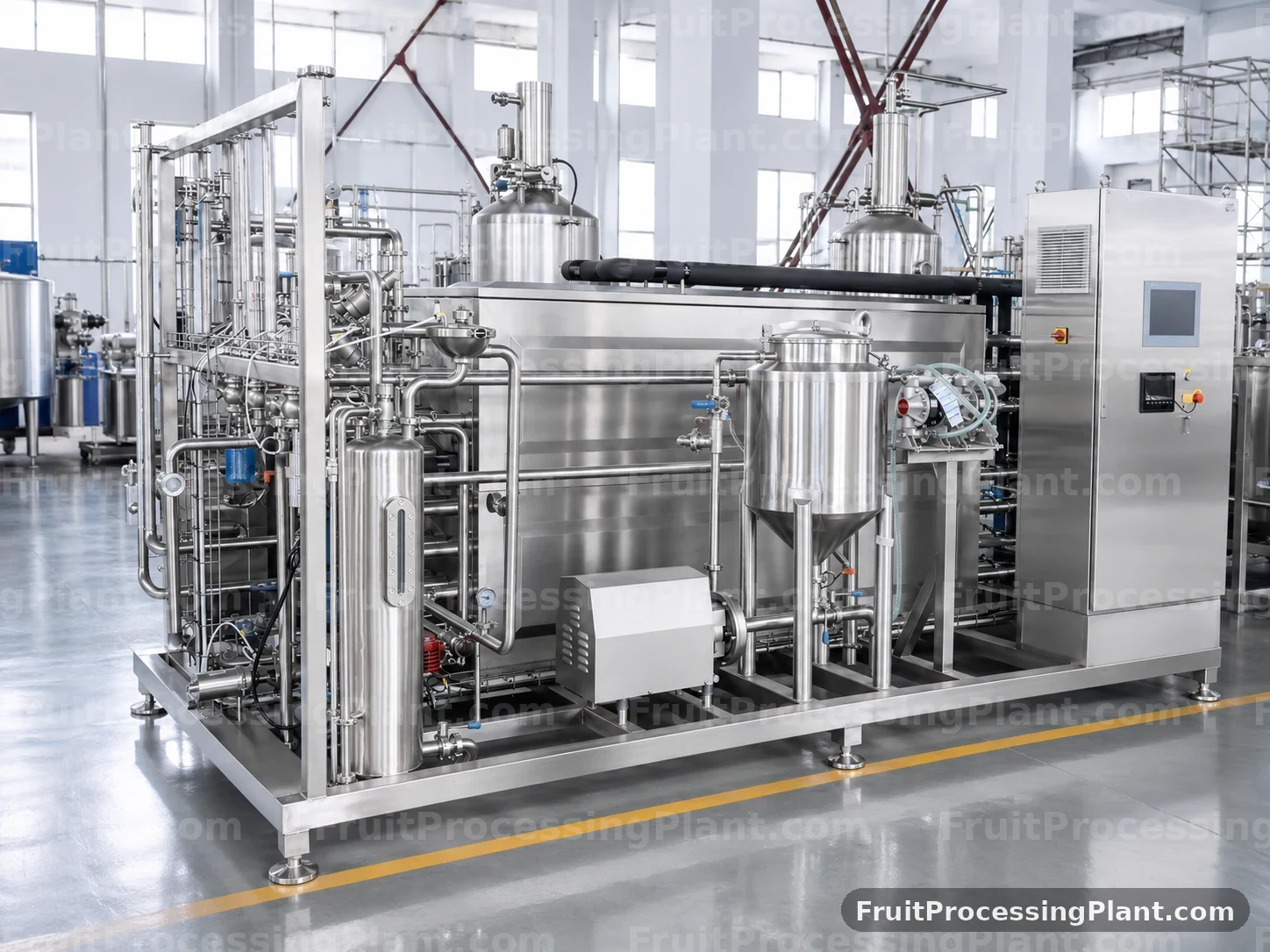
Tubular sterilizer for fruit puree, pulp, juice and sauce heat treatment.
For Tubular Sterilizer for Juice, Puree & Aseptic Lines RFQ, provide product properties, capacity and operation, heat treatment and packaging interface. These data are used to confirm the configuration, interfaces and quotation scope.
The position may vary according to finished product route, plant layout and sanitary design.
Control feed rate, inlet height and raw material condition before Tubular Sterilizer for Juice, Puree & Aseptic Lines so the machine receives a stable load without bridging or unnecessary product damage.
Review this step with product data, line layout and sanitary requirements so Tubular Sterilizer for Juice, Puree & Aseptic Lines can be integrated without creating a bottleneck.
Confirm outlet height, pump or conveyor interface, buffer need and next-machine inlet so the section connects cleanly to the production line.
Provide access for inspection, drain-down and cleaning so product-contact parts can be maintained without excessive downtime.
Review this step with product data, line layout and sanitary requirements so Tubular Sterilizer for Juice, Puree & Aseptic Lines can be integrated without creating a bottleneck.
Tubular Sterilizer for Juice, Puree & Aseptic Lines is commonly discussed for fruit puree sterilization, tomato paste or sauce heat treatment, aseptic bulk product preparation, viscous juice or pulp lines. The goal is to make this module work as part of a complete fruit and vegetable processing line, not as an isolated catalogue item.
Thermal equipment should be selected from viscosity, pulp content, particle size, acidity, packaging route and target shelf life. Low-viscosity clear juice may suit plate heat exchange, while pulpy juice, puree, sauce or concentrate often requires tubular or tube-in-tube handling. Preheating, holding, cooling, back-pressure and CIP access must be designed as one thermal system rather than as a single machine.
The buyer should provide product pH, Brix, fiber level, particle limits, filling temperature and storage target. Heat treatment that is too mild can create microbiological risk, while aggressive treatment can damage aroma, color and texture. The final sterilization or pasteurization condition must be confirmed by product testing and process validation; values on an early page are only a reference for discussion. The RFQ checklist below should be used to confirm the sizing data before quotation.
Related planning pages: plate sterilizer for low-viscosity products, tube-in-tube sterilizer for viscous products, and aseptic filling after sterilization. Use them to compare equipment, plant routes and RFQ scope before final quotation.
The questions below reflect the actual engineering inputs for this equipment category. Reference values are useful for early discussion, but final sizing is confirmed from project data and samples or drawings where needed.
Use measured pH, Brix, viscosity, pulp and particle size to choose plate, tubular, tube-in-tube or retort treatment.
Define inlet, treatment, holding and outlet temperatures together with target holding time and shelf-life route.
Coordinate back pressure, cooling, CIP or SIP, sterile transfer and filling temperature with the downstream package.
Use this checklist when requesting a quote for Tubular Sterilizer for Juice, Puree & Aseptic Lines. If values are preliminary, mark them as reference only so the engineering team can show adjustable options.
| RFQ Field | What to Provide | Why It Matters |
|---|---|---|
| Product properties | Product name, pH, initial Brix, viscosity at a stated temperature, pulp, fiber and maximum particle size. | Rheology and particles determine heat-exchanger geometry, pressure drop and fouling risk. |
| Capacity and operation | Product flow per hour, batch or continuous duty, operating hours and product change frequency. | Flow rate determines heat-transfer area, holding section and cleaning schedule. |
| Heat treatment | Inlet temperature, target treatment temperature, holding time, outlet temperature and required process validation basis. | Thermal duty controls heating medium, holding tube and cooling design. |
| Packaging interface | Aseptic, hot-fill, chilled or retort route, filling temperature, package format and required back pressure. | The package route changes cooling, sterile transfer and SIP requirements. |
| Utilities and cleaning | Steam pressure and quality, cooling-water temperature and flow, power, compressed air, CIP recipe, SIP requirement and drainage. | Steam, cooling and CIP availability determine achievable capacity and hygienic operation. |
The review checks tubular heat treatment for juice and moderate-viscosity products through heat-transfer duty, holding time, pressure drop, regeneration, diversion and CIP design.
Use these checkpoints for early project evaluation. Final equipment selection requires confirmed product data, utility conditions and process requirements.
Direct answers below explain the decisions that change process scope, equipment selection and quotation quality.
Tubular systems are commonly considered for juice, nectar, pulp and moderate-viscosity products that can pass through the selected tube geometry without damaging particles or creating excessive pressure drop. Product pH, Brix, viscosity, fiber, particle size and fouling tendency must still be reviewed. Highly viscous products may require tube-in-tube design.
Holding time is based on the agreed thermal process, product flow and the effective holding-tube volume. Flow variation and residence-time distribution must be considered. The equipment supplier should not invent a shelf-life target; the buyer or qualified process authority needs to define product and package requirements that become the thermal design basis.
Regeneration transfers heat between outgoing hot product and incoming cold product to reduce steam and cooling demand. The practical recovery level depends on temperature approach, fouling, viscosity, pressure arrangement and control stability. A higher stated regeneration percentage should be evaluated together with cleaning, capital cost and safe pressure relationships between product circuits.
Diversion prevents product that has not reached the required time or temperature from entering the hygienic filling route. Valve logic, temperature signals, flow measurement and return destination must be defined. The arrangement should also coordinate with startup, shutdown and filler interruptions so product handling remains controlled during non-steady operating conditions.
Provide product flow, inlet temperature, treatment temperature, holding requirement, outlet temperature, product heat capacity where known, regeneration target, steam pressure and cooling-water temperatures. Fouling allowance and operating hours also matter. These values allow a heat balance; nominal machine capacity alone cannot define real utility consumption at the site.
For a useful quotation, provide product properties, capacity and operation, heat treatment and packaging interface. Mark preliminary values as reference only.