Plant intent
This page is about a complete fruit puree plant for multi-fruit pulp and aseptic products. It connects fruit preparation, pulping, refining, deaeration, tubular sterilization, aseptic filling, CIP and product changeover.
This page is about a complete fruit puree plant for multi-fruit pulp and aseptic products. It connects fruit preparation, pulping, refining, deaeration, tubular sterilization, aseptic filling, CIP and product changeover.
Use the fruit puree processing line process route for process logic, then use this page to define the full factory scope.
This page is about a complete fruit puree plant for multi-fruit pulp and aseptic products. It connects fruit preparation, pulping, refining, deaeration, tubular sterilization, aseptic filling, CIP and product changeover.
This page is for buyers who need a complete plant configuration with equipment, utilities, packaging, installation and commissioning interfaces, rather than a generic machine list.
After the system boundary is clear, review fruit puree processing line cost factors to understand quotation drivers before sending RFQ data.
complete fruit puree plant for multi-fruit pulp and aseptic products. The values below are reference only for early discussion and must be confirmed with project data.
| Plant Area | Typical Reference Only | Why It Matters |
|---|---|---|
| Finished products | Fruit puree, pulp, paste, nectar base and aseptic bulk ingredients. | Texture, fiber, seed limits and viscosity decide the process route. |
| Capacity planning | Reference only: define main fruit, future fruits, intake and campaign schedule. | A multi-fruit plant must avoid oversizing around products that are only occasional. |
| Packaging options | Aseptic bag-in-drum, bag-in-bin, pouch, jar, bottle or bulk tank. | Packaging changes sterilizer, filling, cooling and sanitary design. |
| Flexibility boundary | Pulping screens, tanks, valves, CIP circuits and PLC recipes for product changeover. | Changeover design is what separates a real plant from a simple machine list. |
Each system should be selected from finished product, capacity, sanitary target, packaging and utility conditions.
Different fruits need washing, trimming, destoning, peeling or crushing. The plant should define which modules are shared and which are fruit-specific.
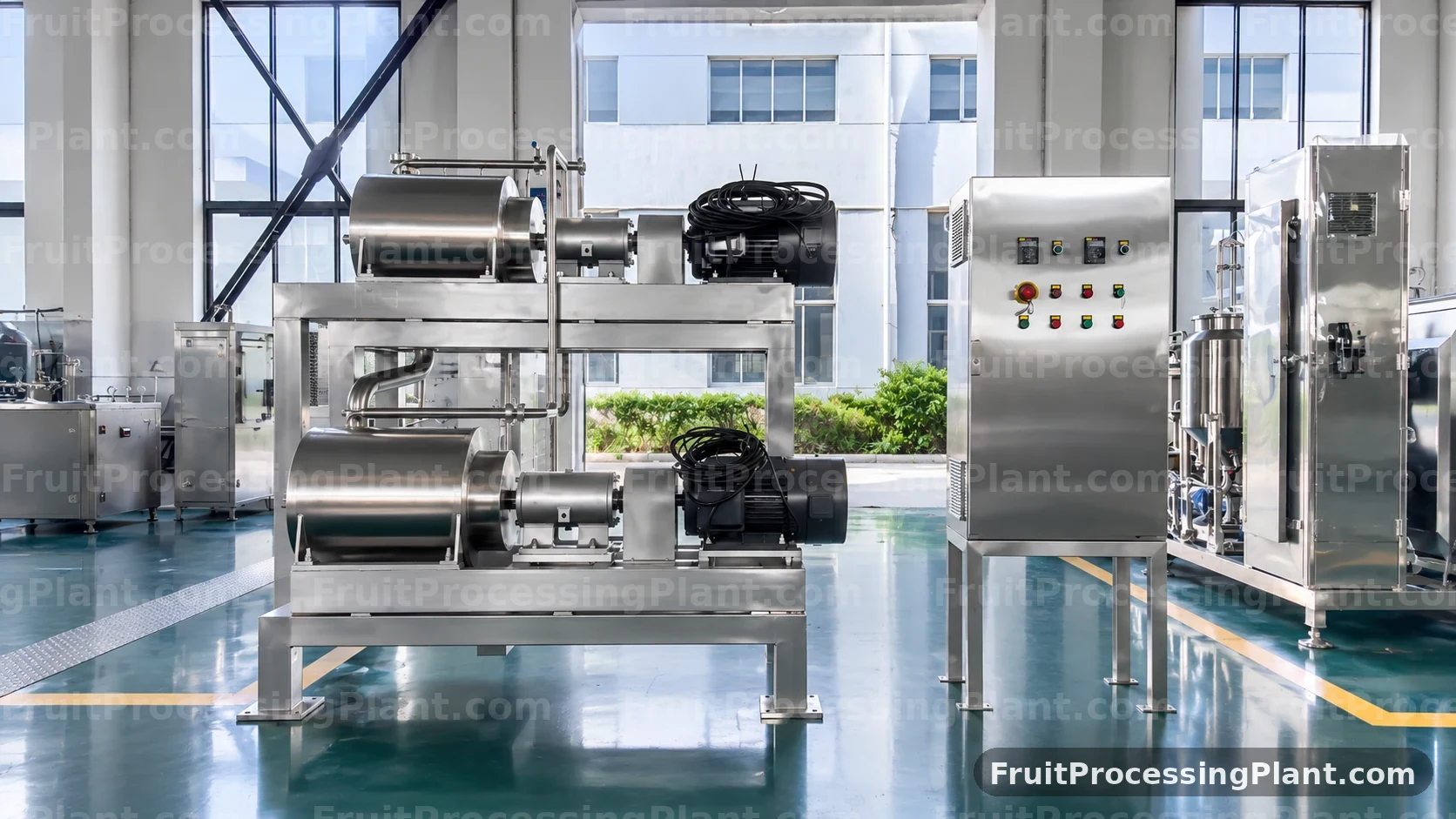
Double stage pulping controls fiber, seeds, peel fragments and particle size. Screen selection should match the finished product rather than a generic puree assumption.
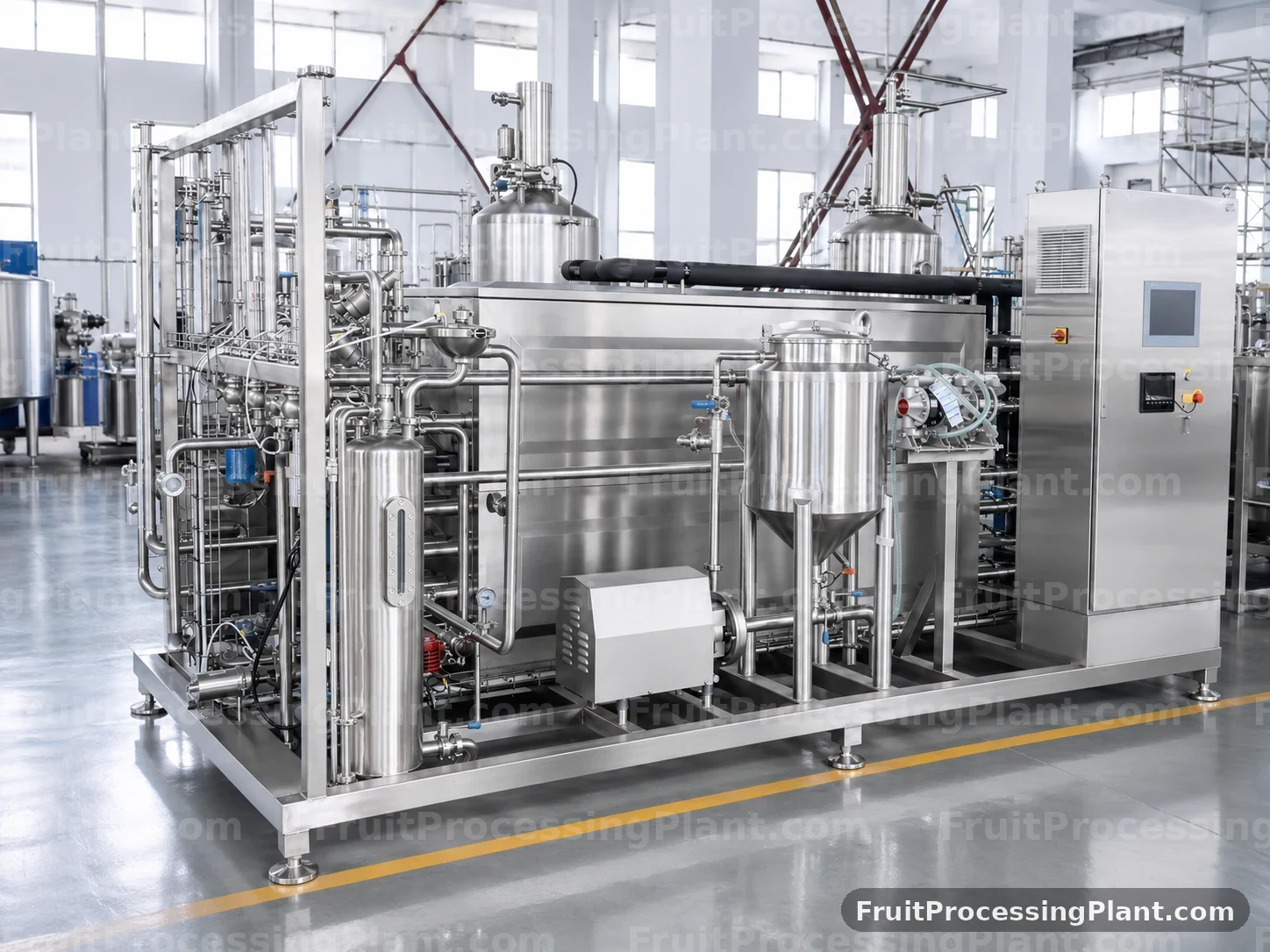
Puree products can foam, oxidize and foul heat exchangers. Vacuum deaeration and tubular sterilization should be selected from viscosity, particles and shelf-life target.
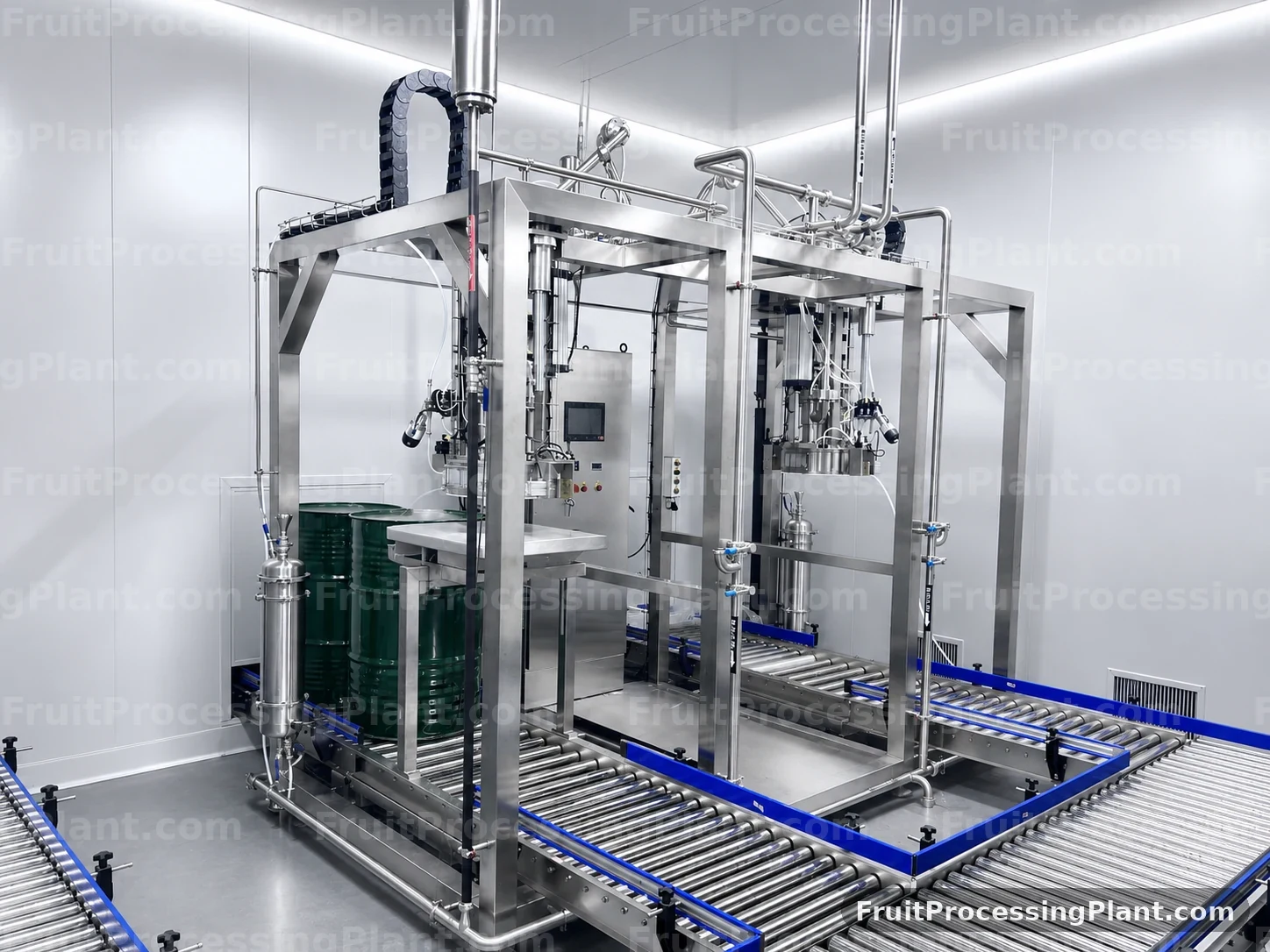
Aseptic bulk filling, CIP and PLC recipes support repeatable production across different puree products. Product changeover must be planned with cleaning time and operator skill.
Choose the process route by the primary fruit first, then add flexibility for secondary fruits. A puree plant should not copy a juice line: fiber, seed removal, viscosity, deaeration, tubular heat treatment and cleaning usually become the central engineering decisions.
The review focuses on a flexible puree factory that must manage different peel, stone, seed, fiber, viscosity, oxidation and cleaning requirements across selected fruits.
Use these checkpoints for early project evaluation. Final equipment selection requires confirmed product data, utility conditions and process requirements.
Direct answers below explain the decisions that change process scope, equipment selection and quotation quality.
Use the priority commercial fruit and the most demanding product condition to define the core line. A viscous, fibrous or particle-containing puree may control pump and sterilizer selection even if another fruit has higher volume. Each additional fruit should be checked for peeling, destoning, seed removal, allergen, color and cleaning compatibility.
Provide screen result, acceptable fiber, seed or skin fragments, particle dimensions and viscosity at a stated temperature. Descriptions such as smooth or natural are not enough for engineering. The texture target determines pulper stages, screen openings, transfer pumps, heat exchanger passage, filler valves and whether yield is being sacrificed through excessive refining.
A shared thermal and filling line may be possible if viscosity, particle size, acidity, sterilization schedule and cleaning requirements fit the same design range. Fruit-specific preparation modules are still required. Engineers should check the worst pressure drop and fouling duty, then define validated recipes and changeover procedures for each product.
Campaigns are often sequenced from lighter color and aroma to stronger products, but the correct order depends on recipe, allergen risk, seed or fiber carryover and cleaning validation. Tank availability and CIP time also influence the schedule. Product sequencing should be discussed during layout design rather than left only to production operators.
Provide building dimensions, column grid, floor levels, drainage, available utility rooms, raw material and packaging flow, hygiene zoning and vehicle access. Also identify expansion space and local equipment. Puree lines need maintenance clearance for pulpers, pumps, heat exchangers and fillers, plus practical routes for waste and CIP return.
Send RFQ for Fruit Puree Processing Plant: raw material, finished product, capacity, Brix, viscosity, packaging, utilities, factory layout, automation requirement and timeline.